The Detroit Lions have made a decisive move in the 2026 NFL Draft, trading up to select Kentucky wide receiver Kendrick Law with the 168th overall pick in the fifth round, a maneuver that signals the team’s aggressive intent to bolster its special teams and offensive depth. The Lions sent picks 181 and 213 to the Buffalo Bills to secure the 5-foot-11, 203-pound speedster, who ran a blistering 4.45-second 40-yard dash at his pro day. This trade, executed late Friday evening, underscores general manager Brad Holmes’ commitment to finding immediate contributors in the later rounds, particularly for a team that fell short in the playoffs last season and is now retooling for another Super Bowl push.

Law, 22, brings a dynamic skill set that the Lions believe can transform their return game and add a gadget element to an already potent offense. During his lone season at Kentucky after transferring from Alabama, Law posted career highs with 53 receptions for 540 yards and three touchdowns, averaging 10.3 yards per catch. His production, however, came in a limited role heavily reliant on screens and quick hitters, with an average target depth of just 3.4 yards, according to draft analysts. This has raised questions about his ability to expand his route tree, but the Lions are betting on his raw athleticism and explosive lower body power to overcome those limitations.
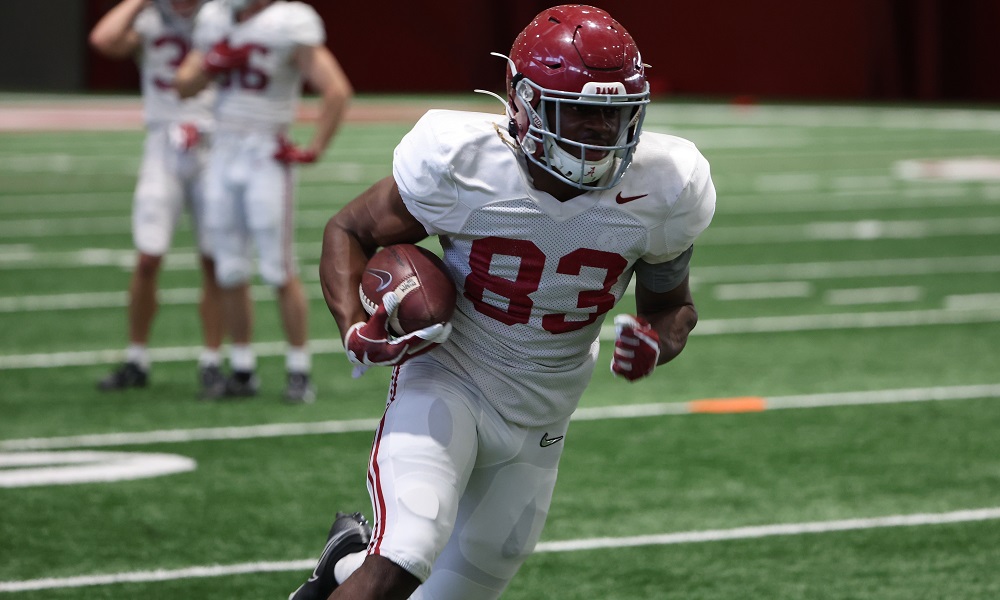
The Lions’ front office has been laser-focused on upgrading special teams after a disappointing 2025 season where kick and punt returns often stalled field position. Law’s 42-inch vertical jump and 10-foot broad jump at the combine confirm his elite explosiveness, traits that made him a standout returner during his time at Alabama. He is expected to compete immediately for both kick and punt return duties, filling the void left by Kalif Raymond, who departed for the Chicago Bears in free agency. The team also signed Greg Dorch earlier this offseason, creating a fierce competition for roster spots among smaller, shiftier wideouts.
Law’s path to the NFL has been one of steady improvement. After three seasons at Alabama where he was primarily a rotational player, he transferred to Kentucky seeking a larger role. His production jumped significantly, but scouts note that his touchdown total remains a concern, with just four career scores across 46 college games. Still, the Lions see untapped potential in his thick, compact frame that absorbs contact and maintains balance through catches. His reliable hands and strong grip strength mean he rarely drops passes, even in traffic, making him a valuable target on short throws and jet sweeps.
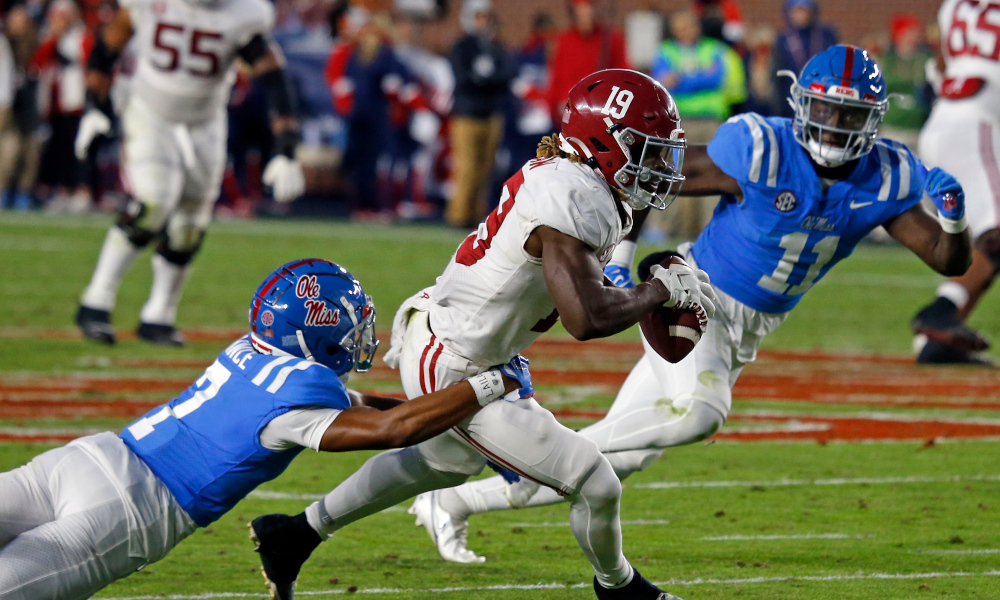
The trade itself reflects a calculated risk by Detroit. By moving up from picks 181 and 213, the Lions effectively sacrificed two late-round selections to ensure they landed their target. This is a familiar strategy for Holmes, who has shown a willingness to be aggressive when he identifies a player who fits the team’s culture and scheme. The Bills, meanwhile, gain additional draft capital to address their own needs, a move that benefits both sides. For the Lions, the cost was minimal, but the message is clear: they are not content to wait and hope.
Head coach Dan Campbell and offensive coordinator Ben Johnson are already scheming ways to integrate Law into the offense. His ability to run jet sweeps and take handoffs reminiscent of former Lion Jamison Crowder’s role, but with more physicality, could make him a matchup nightmare for defenses. The Lions have long valued multi-dimensional players, and Law’s background as a returner only enhances his value. Campbell has emphasized winning all three phases of the game, and Law’s addition directly addresses the special teams unit that struggled in 2025.
The impact on the Lions’ wide receiver depth chart is immediate and significant. With Amon-Ra St. Brown, Jameson Williams, and Isaiah Williams locked in as the top three, Law will compete with Greg Dorch, Tom Kennedy, and last year’s draft pick Dominic Lovett for the remaining spots. Lovett, who did not see game action in 2025, now faces a serious challenge for a roster spot. The Lions’ front office has shown a willingness to move on from underperforming players, and Law’s arrival could signal the end of Lovett’s tenure in Detroit. Kennedy, a fan favorite, also faces an uphill battle to make the final 53-man roster.
Law’s college career, spanning 46 games, has been marked by flashes of brilliance but also inconsistency. At Alabama, he was buried on a depth chart loaded with future NFL talent, but his special teams contributions were undeniable. His transfer to Kentucky allowed him to showcase his skills as a receiver, though the offense’s reliance on short passes limited his opportunities to stretch the field. The Lions are confident that with NFL coaching and a more diverse playbook, Law can develop into a reliable option on intermediate routes.
The broader context of this draft pick cannot be ignored. The Lions have already addressed key needs on defense earlier in the draft, and this selection signals a shift toward adding depth and versatility on offense. The team’s 2025 season ended in heartbreak, with a narrow loss in the NFC Championship Game, and the front office has been methodical in addressing weaknesses. Law’s addition is part of a larger strategy to ensure the Lions are not one-dimensional, capable of winning games through multiple avenues.
Analysts have given the pick a solid B grade, acknowledging the value of adding a special teams ace with offensive upside in the fifth round. The Lions’ draft class so far has been praised for its balance, with early picks focusing on defensive line and secondary, while later rounds have targeted high-upside offensive players. Law fits this mold perfectly, offering immediate return value with the potential to grow into a more significant offensive role over time.
The special teams unit, in particular, stands to benefit. In 2025, the Lions ranked near the bottom of the league in average kick return yardage, a statistic that directly impacted field position and scoring opportunities. Law’s explosiveness and vision in the open field could reverse that trend. His 42-inch vertical also makes him a threat on punt coverage, as he can high-point balls and disrupt returners. The Lions have invested heavily in special teams coach Dave Fipp’s system, and Law is the latest piece in that puzzle.
For Law, the transition to the NFL will require significant refinement. His route running is raw, with tight hips that limit his ability to separate on deeper patterns. He lacks burst out of his cuts, and his adjustment to deep balls has been inconsistent. However, the Lions are not asking him to be a primary receiver. They want him to contribute on special teams and provide a spark in gadget plays, roles that play to his strengths. With time and development, he could become a more complete player.
The Lions’ fanbase has reacted with cautious optimism, recognizing that late-round picks are often lottery tickets. Social media has been buzzing with comparisons to former Lions returner Kalif Raymond, who carved out a successful career as a special teams standout and occasional offensive contributor. Law’s physical tools are superior, but he must prove he can handle the NFL’s speed and complexity. Training camp will be his first major test, and the competition with Dorch and others will be intense.
The trade also has implications for the Lions’ remaining draft capital. With only a few picks left, the team will likely focus on addressing depth at safety, running back, or tight end. The front office has shown discipline in not reaching for needs, instead targeting players they believe can contribute immediately. Law’s selection fits this philosophy, as he is expected to make the roster and play a role in 2026.
Looking ahead, the Lions’ wide receiver room is now one of the deepest in the league. St. Brown remains the alpha, Williams provides deep threat ability, and Isaiah Williams offers reliable hands in the slot. Law and Dorch add speed and versatility, while Kennedy and Lovett provide experience. The competition for the final spots will be fierce, but that is exactly what Campbell wants. Iron sharpens iron, and the Lions are building a roster that can withstand injuries and maintain high performance.
The broader NFL landscape has taken notice of Detroit’s aggressive approach. The Lions are no longer a team content with moral victories; they are a legitimate contender making moves to win now. Trading up for a player like Law, even in the fifth round, sends a message that every pick matters. The front office is not afraid to be bold, and that mindset has resonated with players and fans alike.
In the end, the Kendrick Law pick is about more than just one player. It is about the Lions’ commitment to winning in all phases, to finding value in the later rounds, and to building a roster that can compete for a championship. The trade with the Bills was a small price to pay for a player who could become a fan favorite and a key contributor. As training camp approaches, all eyes will be on Law to see if he can live up to the hype. The Lions are betting he will, and the NFL is watching.
A bold draft move signals a focus on explosive playmaking.
