The silence in the Yankees clubhouse was broken not by a roar from the crowd or the crack of a bat, but by the subtle scrape of a cleat on a rubber slab. In the sweltering heat of Lakeland, Florida, a 26-year-old right-hander named Will Warren has quietly, methodically, rewritten the narrative of the 2026 New York Yankees season. The adjustment is microscopic, a mere 17-inch shift from the first-base side of the pitching rubber to the third-base side, but the seismic implications are now undeniable. This is not a story of hype or wishful thinking; it is a story of measurable, real progress that could redefine the team’s October aspirations.

The Yankees entered spring training 2026 with a rotation in tatters. Ace Gerrit Cole is rehabbing from Tommy John surgery, Carlos Rodon is recovering from his own elbow procedure, and Clarke Schmidt is also sidelined following a Tommy John operation. The team was staring into an abyss of unproven arms, leaning heavily on a young core to carry them through the first two months of the season. Enter Will Warren, a pitcher who, just months ago, was a question mark with a 4.44 ERA and a glaring vulnerability against left-handed hitters. Now, he has become the most quietly compelling story of the spring.
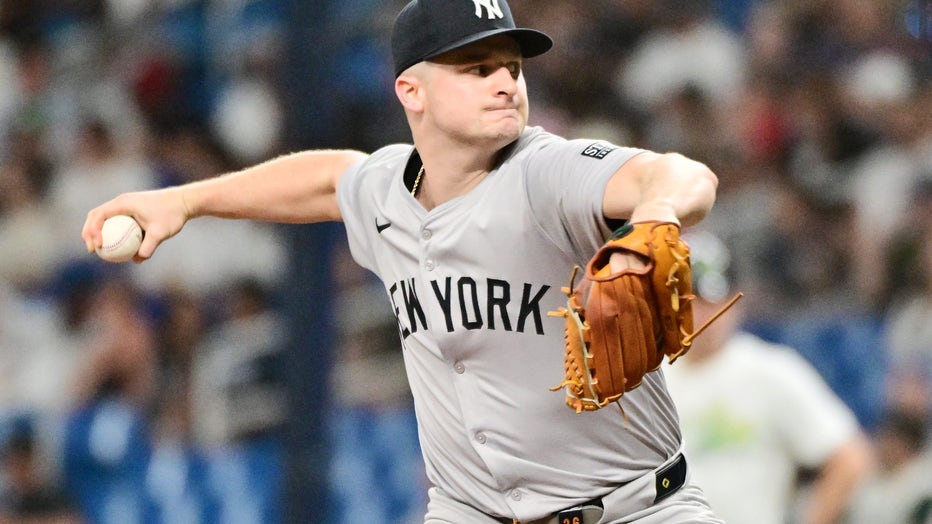
The transformation began in the offseason. Warren, working alongside the Yankees pitching staff, made a deliberate choice to return to his collegiate roots. During his days at Southeastern Louisiana University, he pitched from the third-base side of the rubber. The Yankees did not invent a new mechanic; they simply helped him rediscover an old one. The result has been nothing short of stunning. In his most recent outing against the Detroit Tigers, Warren delivered six full innings of dominant baseball, a feat that coaches rarely see in spring training. It was a statement that demanded attention.
Manager Aaron Boone, notoriously cautious during the exhibition season, did not mince words. After the 4-3 win over the Tigers, Boone said Warren looks another year along in his development. That is a loaded statement from a manager who knows the stakes. The Yankees are not just hoping Warren can survive; they are betting he can thrive. The mechanical tweak has fundamentally altered the angle of every pitch he throws, closing the gap against left-handed hitters who posted a 786 OPS against him in 2025. The shift has turned a statistical weakness into a potential weapon.
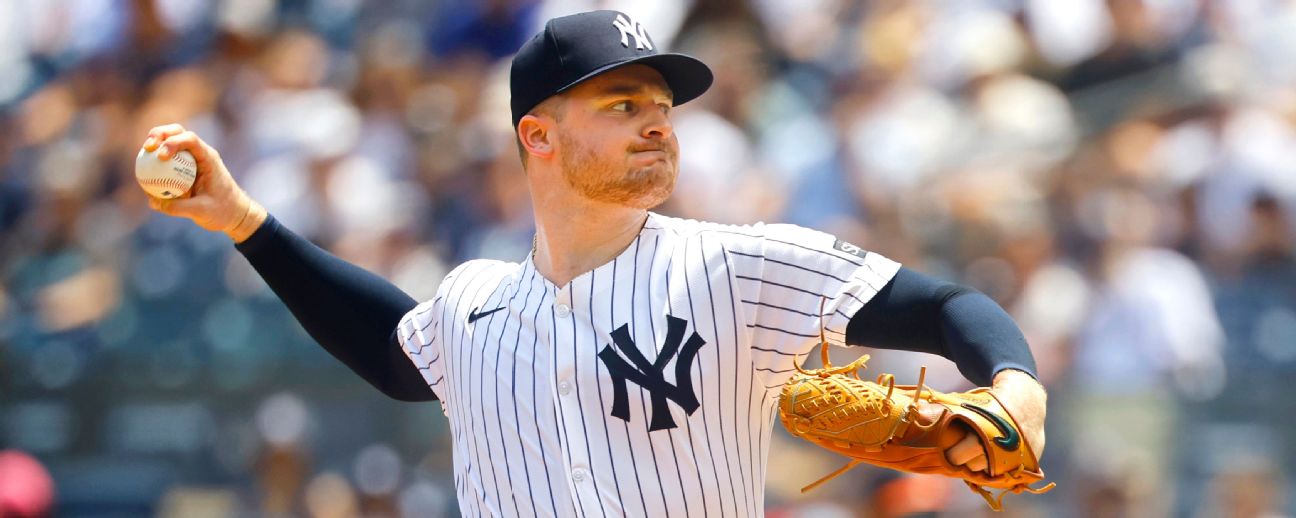
Warren’s 2025 season was a study in inconsistency. He made 33 starts, logging 162.1 innings with a 4.44 ERA. The encouraging statistic is that he held opponents to three earned runs or fewer in 24 of those starts, a 73% quality start rate. The problem was the other nine outings, where he would lose emotional control, snowball, and give up too many runs before the inning could settle. Boone directly flagged this issue, pointing to the need for emotional control and slowing the game down. Warren has taken those mental reps seriously, and the results are now visible.
The numbers from this spring are staggering. Through his first several outings, Warren is posting a 1.42 ERA, has not issued a single walk, and is striking out batters at a 29.2% rate. His fastball, which averages 93.3 mph, plays significantly harder due to elite extension measured at 6.8 feet off the mound, placing him in the 81st percentile in MLB. His sweeper is spinning at an eye-popping 3,330 revolutions per minute. All five of his pitch offerings have been graded above average in at least one recent outing. This is not a pitcher surviving spring; this is a pitcher who has genuinely leveled up.
The context of the 2026 rotation makes Warren’s emergence even more critical. Max Fried is locked in as the opening day starter, confirmed by Boone on March 10th, taking the ball on March 25th in San Francisco against the Giants. Fried was brilliant in 2025, posting 19 wins with a 2.86 ERA over 195.1 innings. Behind him, Cam Schlittler, the postseason revelation who struck out 12 in eight innings during the wild card against the Red Sox, slides in as the number two. And then there is Will Warren, the confirmed third starter. Ryan Weathers and Luis Gil round out the five-man unit.
Until Cole and Rodon return, expected sometime between April and June, these five arms are the entire story. And Will Warren is the lynchpin. The insight that most Yankees coverage is missing is that this is not just a mechanical adjustment; it is a reconnection. Warren is not experimenting with something new. He is returning to the version of himself that the Yankees fell in love with back in 2021 when they took him in the eighth round out of Southeastern Louisiana. They saw elite spin rates, deceptive extension, and a pitcher with the raw stuff to miss bats at the big league level.
What happened over the minor league years and his 2024 debut was a drift away from the rubber positioning that worked toward mechanics that made him more predictable against left-handed hitters. The Yankees pitching staff identified that drift and fixed it. That is not coaching a player to be something new; that is coaching a player back to something proven. The distinction matters because the confidence is real. Warren is not guessing whether this works; his muscle memory already knows it does. When he says he can get anyone out, he is drawing on something he has already experienced.
Compare this to what Clarke Schmidt was building before his Tommy John surgery last July. Schmidt had made 32 starts in 2023, posted a 4.64 ERA, and dealt with similar inconsistency issues against left-handed batters. Then he arrived at spring training 2024 sharper, more defined in his approach, and elevated his entire game. The developmental pattern is almost identical, except Warren is doing it in a year when the Yankees desperately need the leap to actually happen. Schmidt had the luxury of time. Warren does not. The urgency is palpable.
The best-case scenario for 2026 is that the rubber adjustment holds, the left-handed hitter split closes meaningfully, and Warren eliminates the blowup outings. If he converts even half of those nine disaster starts from 2025 into acceptable three-run efforts, his ERA drops from 4.44 to somewhere in the 3.40 to 3.70 range. That makes him a legitimate mid-rotation asset on a World Series contender, not a liability to survive but a weapon to deploy. Given his 95th percentile run value on his fastball last season and his sweeper’s elite spin rate, this outcome is genuinely within reach.
In the conservative case, Warren continues to be a reliable innings eater. He might not take the next step to elite territory, but a pitcher who gives you six innings of three-run ball in 25 out of 33 tries is worth more than his ERA suggests. He keeps the bullpen fresh, keeps the team in games, and critically gives Max Fried starts meaning within the flow of a five-man rotation. The Yankees do not need Warren to be the story. They need him to be ready enough that when Cole comes back in June or July, sliding into the lineup does not feel like a rescue operation but a genuine upgrade.
The scene in Lakeland was telling. Before his dominant outing, Warren walked into the ballpark to warm up and saw Justin Verlander on the mound. Verlander, 43 years old, a first-ballot Hall of Famer in the final chapter of his career, was back home with the Detroit Tigers. Warren’s reaction was measured. He stepped aside, showed respect, and got to work. That composure is not trivial. It tells you something about the headspace this 26-year-old is carrying into what could be the most important season of his young career. He is not intimidated by the moment; he is embracing it.
The Yankees Universe is buzzing with a cautious optimism that feels earned. Warren has directly targeted lefties in practice, throwing the entire kitchen sink at them. After one outing, he said he felt great and that everything looked sharp. The numbers back it up. The 1.42 ERA, the zero walks, the 29.2% strikeout rate, these are not spring training mirages. They are the product of a deliberate, calculated adjustment that has unlocked a hidden ace. The question now is whether this performance can translate to the regular season when the games actually count.
The stakes could not be higher. The Yankees are entering 2026 with a rotation that is simultaneously fragile and full of potential. Max Fried is the anchor, but behind him, the uncertainty is thick. Will Warren is the key that could unlock a successful first half. If he falters, the team will be scrambling for answers until Cole and Rodon return. If he thrives, the Yankees will have a rotation that is deeper and more dangerous than anyone anticipated. The margin for error is razor-thin, and Warren is standing on the edge.
The development pattern is eerily similar to what the Yankees saw with Clarke Schmidt before his injury. Schmidt struggled with consistency, then found a new level of sharpness in spring training. Warren is following the same trajectory, but with a critical difference. He is doing it in a year when the Yankees have no safety net. The pressure is immense, but Warren seems unfazed. He is not just surviving spring training; he is dominating it. And that is a signal that the Yankees cannot afford to ignore.
The mechanical fix addresses the biggest statistical vulnerability from 2025. Left-handed hitters posted a 786 OPS against Warren and hit .266 off him. Right-handers had a 680 OPS and a .232 average. That gap is significant and not random. Right-handers pitching from the first-base side of the rubber naturally have a tighter angle to left-handed batters. Moving to the third-base side widens that angle, creating a different sight line for left-handed hitters and making Warren’s pitches look like they are attacking from outside the zone before darting back. The change is subtle but devastating.
The Yankees pitching staff deserves credit for identifying the drift and correcting it. This is not a story of a player failing and being rescued; it is a story of a player and a coaching staff working in perfect harmony. They did not try to reinvent Warren. They helped him find his way back to something that already felt natural. That is smart player development, the kind that turns a shaky 4.44 ERA into a compelling spring narrative. The result is a pitcher who is not just surviving but thriving, and the implications for the 2026 season are profound.
The bottom line is clear. Will Warren came into 2026 spring training with a 4.44 ERA, a left-handed hitter problem, and the weight of a rotation missing its three biggest names. He responded by moving 17 inches on a rubber slab, and suddenly everything looked sharper. That is not luck. That is a player and a coaching staff doing their jobs at the highest level. Small change, big story. This is what development looks like in Pinstripes. The Yankees Universe is watching, and for the first time in months, there is genuine reason to believe.
The question now is whether Warren can sustain this momentum. The regular season is a different beast, with 162 games and the pressure of a demanding fan base. But if his spring performance is any indication, the Yankees have found a hidden ace. The rotation is no longer a question mark; it is a statement of intent. Will Warren is ready, and October is calling. The only question left is whether the rest of the league is ready for him. The answer, based on the evidence, is a resounding no.
A breakout performance could reveal a dangerous new October asset.
