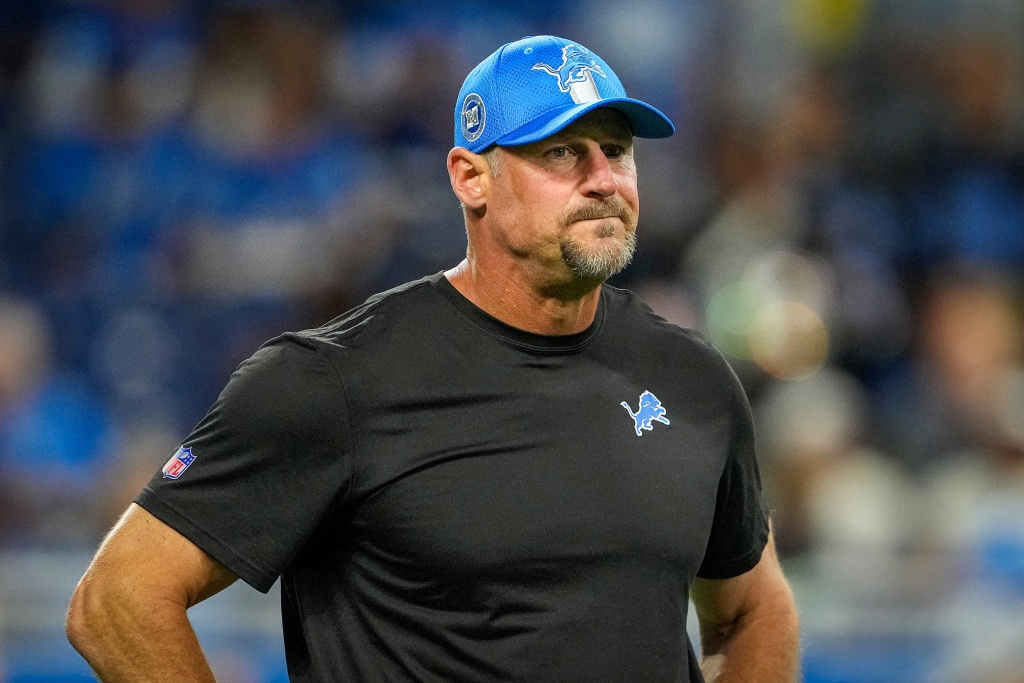
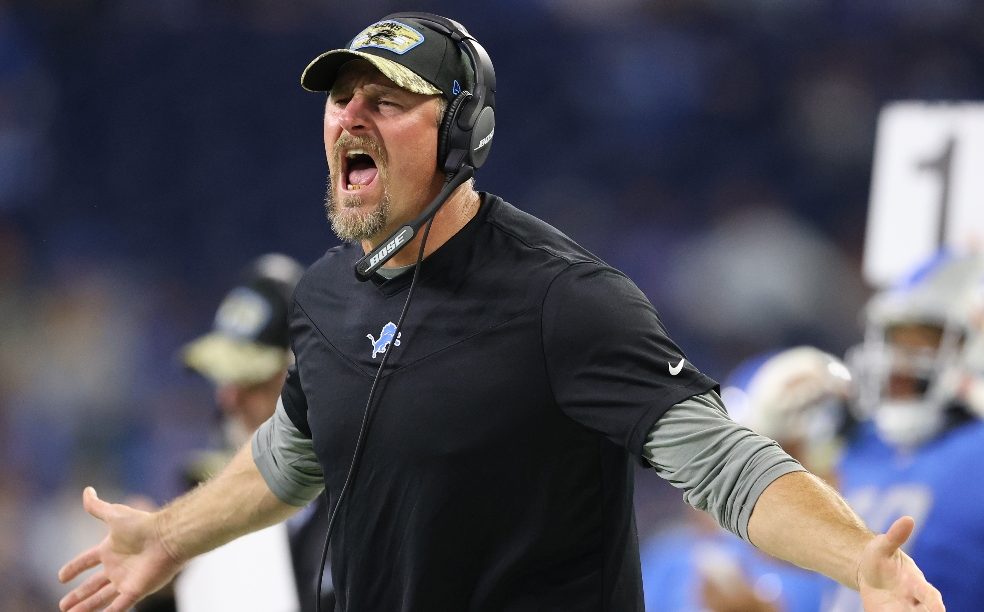
The Detroit Lions’ entire offseason strategy has been thrown into a state of high-stakes flux following a monumental decision from head coach Dan Campbell. In a move that will fundamentally reshape the team’s draft approach and offensive line, Campbell has officially endorsed the plan to move All-Pro right tackle Penei Sewell to the critical left tackle position. This seismic shift, confirmed to team personnel Wednesday morning, directly addresses the void created by the release of longtime starter Taylor Decker and alters the calculus for General Manager Brad Holmes with the NFL Draft just days away.

Campbell’s directive prioritizes protecting quarterback Jared Goff’s blind side with the team’s best overall lineman, a philosophy that overrides the inherent risk of switching a dominant player’s position. Sewell, a First-Team All-Pro at right tackle, has experience on the left side from his college career at Oregon and sporadic early NFL snaps, but mastering the footwork and technique flip at the professional level presents a significant challenge. The coaching staff, led by offensive line guru Hank Fraley, is betting on Sewell’s elite athleticism and work ethic to make the transition seamless.
This decision immediately liberates Holmes and the front office from being pigeonholed into selecting a left tackle with their first-round pick, 17th overall. The draft board now opens up considerably, allowing the Lions to target the best player available or select a natural right tackle to fill Sewell’s former spot. Top tackle prospects like Utah’s Caleb Lomu, who was widely mocked to Detroit, now join a pool that includes several collegiate right tackles who may be better fits for the vacancy on the right side.
The ripple effects of this move are vast and intersect with two other pressing organizational dilemmas: executing a pivotal draft and managing a cascade of contract extensions for core young stars. Holmes now operates with a clearer, though no less complex, draft blueprint. The need at offensive tackle remains acute, but the type of player sought may have changed. Furthermore, the team must still address the departure of defensive leader Alex Anzalone and bolster the edge rush opposite Aidan Hutchinson.
Simultaneously, the front office is engaged in critical financial negotiations that will define the franchise’s competitive window. Fifth-year options for running back Jahmyr Gibbs and linebacker Jack Campbell must be decided by April’s end, with long-term extensions for both players, along with tight end Sam LaPorta and defensive back Brian Branch, looming on the horizon. The timing is precarious, as a pending market-resetting deal for Atlanta’s Bijan Robinson could dramatically increase Gibbs’ price tag.
Campbell’s endorsement of the Sewell move is a definitive, aggressive stroke from a regime known for its conviction. It signals an unwavering commitment to maximizing Goff’s protection and an immense trust in Sewell’s versatility. However, it is not a decision made in isolation. It is the first domino in a series of interconnected maneuvers that will determine whether the Lions can build upon their NFC Championship Game appearance or face a step back.
The pressure on Brad Holmes intensifies accordingly. His draft strategy, once seemingly focused on finding Decker’s immediate replacement, must now adapt to secure a new cornerstone for the right side of the line. Names like Oregon State’s Joshua Gray, Washington’s Roger Rosengarten, or even a trade-down scenario to accumulate more capital, could rise to the forefront of Detroit’s plans. The flexibility is a gift, but it demands precise evaluation.
On defense, the loss of Anzalone creates a leadership and production vacuum in the linebacker corps. Jack Campbell is the heir apparent in the middle, but the WILL linebacker spot is now a glaring need. Prospects like Texas Tech’s Jacob Rodriguez, noted for his playmaking and forced fumbles, or Junior Colson of Michigan, could be targeted on Day Two to inject immediate physicality and instinct into the second level.
Furthermore, the pass rush remains an area for potential investment. While the re-signing of veteran Romeo Okwara provides depth, adding a dynamic bookend to Hutchinson would transform the defensive front. Using a premium pick on an edge rusher, such as Michigan’s Derrick Moore or Alabama’s Chris Braswell, could be the final piece for a defense aiming to become elite.
All of these football decisions unfold against the tense backdrop of the salary cap. The contract situations for Gibbs, LaPorta, Branch, and Jack Campbell represent a defining challenge for Holmes’ roster construction. Letting any of these homegrown stars reach free agency would be a severe blow, yet the economic reality of the modern NFL makes it impossible to pay everyone top-of-market value simultaneously.
The Lions are navigating the treacherous waters of sustained contention, where every resource—draft capital, cap space, and player development—must be optimized. Dan Campbell’s bold decision on Sewell has set a new course. It is now incumbent upon the entire organization to ensure the ensuing moves align perfectly, fortifying a roster that believes its Super Bowl window is wide open. The coming days will reveal whether this calculated gamble solidifies the foundation or introduces unforeseen instability.
A bold call from the head coach is sending waves through the fanbase.
