A concerning pattern of draft missteps is forcing the San Francisco 49ers into a cycle of repetitive and costly corrections, casting a shadow over their upcoming first-round selection. Analysis of the team’s recent draft history reveals a troubling trend where high-profile misses have directly led to the urgent need to re-draft the same positions, squandering valuable capital.

The evidence spans nearly a decade. In 2017, the selection of defensive end Solomon Thomas proved insufficient, leading to the investment of the No. 2 overall pick in Nick Bosa just two years later. That same 2017 draft yielded linebacker Reuben Foster, a bust whose failure necessitated finding Fred Warner in 2018.

The wide receiver position has been particularly problematic. The 2018 second-round pick of Dante Pettis flopped, prompting the team to use second-round capital on Deebo Samuel in 2019 and first-round capital on Brandon Aiyuk in 2020. The quest for a big-bodied third receiver saw Jalen Hurd fail in 2019, leading to the selection of Jauan Jennings in 2020.
Most famously, the catastrophic first-overall investment in quarterback Trey Lance in 2021 forced the franchise to return to the well in 2022 for Brock Purdy. This pattern of immediate overcorrection continued with running backs Trey Sermon and Tyrion Davis-Price in consecutive third rounds, and safeties Ji’Ayir Brown and Malik Mustapha in back-to-back years.
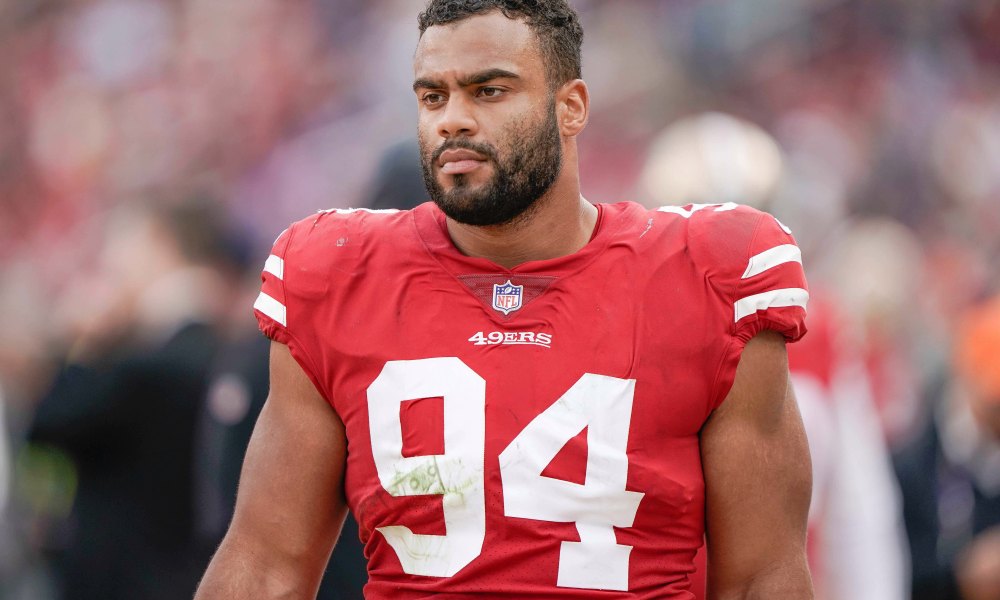
This history creates a critical context for the 2026 draft. The 49ers’ last three first-round picks were used on a defensive end, a wide receiver, and a safety. Yet, according to analysts like Matt Maiocco, their top remaining needs heading into the draft are an edge rusher, a wide receiver, and a safety.
The cycle appears self-perpetuating. “When you miss in the draft, that leads to an overcorrection,” one analyst noted. “The 49ers often under John Lynch and Kyle Shanahan have had to overcorrect for previous misses.” This raises urgent questions about the team’s long-term drafting strategy and its impact on sustaining a championship window.
Compounding the issue is the significant personnel influence of Head Coach Kyle Shanahan. As a coach rather than a traditional talent evaluator, his preference for players who are ready to contribute immediately may lead the organization to reach for prospects who fill a specific short-term need over those with higher long-term upside.
This dynamic is now central to the team’s most pressing dilemma: the offensive line. The 49ers have drafted only one offensive lineman in the first round during the Lynch-Shanahan era. With left guard a glaring vacancy and future Hall of Famer Trent Williams’ contract situation unresolved, the pressure to finally address the trench is immense.
The Trent Williams saga looms large over draft night. The team has pushed a decision on his extension to the draft, with rumors persisting about a potential trade, possibly to the Kansas City Chiefs. Moving the 38-year-old star would contradict the “win-now” ethos of an offseason that saw the acquisitions of Mike Evans and Christian Kirk.
“If you’re trying to win right now, you’re not taking an offensive tackle in the first round that’s not going to play,” an analyst stated, highlighting the complex calculus. This makes a player like Texas A&M’s Chase Bissanthe, a plug-and-play guard, a logical if unsexy target at pick No. 27.
Should they avoid the offensive line, wide receiver and edge rusher remain clear needs. The team has hosted several top receiver prospects, including Omar Cooper Jr. and Casey Conspinson, on “top 30” visits. However, some believe this could be a smokescreen for interest in other pass-catchers like Chris Bell.
The ghost of recent receiver misses also haunts the process. With Ricky Pearsall’s rookie year derailed by injury and questions about the long-term status of veterans, the position lacks stability. “Mike Evans and Christian Kirk are on one-year contracts,” an analyst pointed out. “It might be wise to take a wide receiver who you can develop.”
The edge rusher class presents options like Auburn’s Kel Faulk, but the 49ers are in a challenging spot at No. 27 in a draft considered weak at quarterback. This limits the potential for elite talent to fall into their laps, increasing the likelihood of another reach to fill a need.
As draft night approaches, the organization’s recent history is a cautionary tale. Each miss creates a domino effect, consuming future resources and keeping the roster in a state of perpetual catch-up at key positions. The decision at No. 27 is not just about selecting a player; it is a test of whether the franchise can finally break a costly and debilitating cycle.
The 49ers’ championship window, reinforced by bold offseason moves, remains open. Yet, their ability to consistently identify and develop foundational talent through the draft will ultimately determine how long it stays that way. All eyes are on the war room to see if this pick represents a step forward or merely another reaction to a past mistake.
Insiders suggest something major is brewing — and it could explode at any moment.
