San Francisco 49ers head coach Kyle Shanahan has launched a fiery public accusation against the Los Angeles Rams, alleging they orchestrated a schedule change to avoid a hostile home environment. Shanahan’s explosive comments came during a casual media session, revealing a simmering frustration within the 49ers organization over the NFL’s international scheduling. The core issue is the relocation of a Rams home game against the rival 49ers from SoFi Stadium in Los Angeles to Australia for the upcoming season.
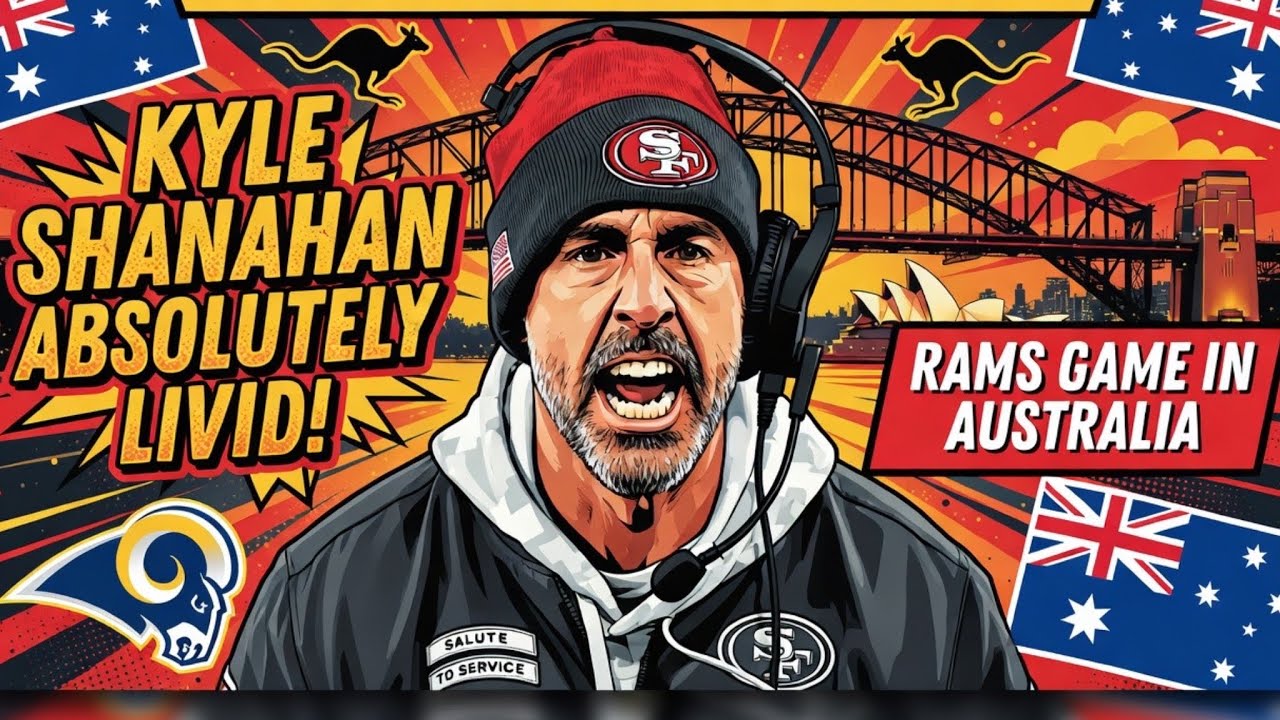
Shanahan stated unequivocally that the Rams lobbied the league to move the contest overseas. He expressed clear annoyance at the maneuver, framing it as a direct response to the 49ers’ notorious ability to turn SoFi Stadium into a de facto home game. For years, traveling 49ers faithful have dominated attendance in Los Angeles, creating an embarrassing and competitive disadvantage for the Rams during those matchups.

“Pretty sure the Rams lobbied for that game. I know for a fact they did,” Shanahan declared, his tone leaving no room for ambiguity. He views the move as a strategic ploy by the Rams to neutralize the 49ers’ significant fan advantage in Southern California. By moving the game to a neutral site thousands of miles away, the Rams potentially erase one of the 49ers’ unique edges in the fierce NFC West rivalry.
The situation is further complicated by the 49ers’ own schedule, which now features two international games. This imbalance prompted Shanahan to issue a direct and public counter-proposal to the NFL league office. He argued that fairness demands the Rams also be required to play an international game against his team, specifically suggesting a matchup in Mexico City.

“Hopefully the league will do right and let us play the Rams in Mexico since we got to go out of the country twice and they requested us,” Shanahan said. “I’m requesting them in Mexico.” He was quick to downplay any notion that this was about seeking a similar advantage, instead framing it purely as a matter of equitable treatment. “Not that that gives us an advantage. It’s just fair to make them go out of the country.”
Shanahan’s candid remarks peeled back the curtain on the often-opaque world of NFL scheduling and team lobbying. His assertion provides rare insight into the behind-the-scenes machinations where teams actively seek competitive edges through the calendar. The coach’s frustration was palpable as he discussed the logistical and competitive burden placed on his team.
The 49ers’ head coach acknowledged understanding the Rams’ motivation, even while condemning the outcome. “I get that. That would suck to have to do a silent cadence and have our home game at their stadium,” he said, referencing the communication difficulties quarterbacks face in deafening road environments. “So I get their ambitions, but they were rewarded that. So I’m just hoping we can get our request.”
Shanahan’s proposal for a Mexico City game highlights the 49ers’ robust international fanbase, which he enthusiastically praised. “I’d love them to come to Mexico. That’s awesome. Our Mexican fan base is awesome… They are amazing,” he stated. This comment underscores the modern NFL’s global strategy, where teams cultivate followings abroad, often creating unexpected “home” environments in foreign countries.
The setting of Shanahan’s comments added another layer of intrigue. He was speaking alongside Green Bay Packers head coach Matt LaFleur and analyst Chris Simms, in what appeared to be a relaxed setting. Observers noted that LaFleur seemed to bait Shanahan into the topic, aware of his strong feelings on the matter, leading to the unfiltered reaction captured by hot microphones.
Simms later confirmed the anticipation surrounding Shanahan’s stance, indicating the coach’s displeasure was an open secret within league circles. “I knew he might go this way when he brought it up. I knew it,” Simms remarked. This suggests Shanahan’s position was well-known internally, but his decision to voice it publicly marks a significant escalation in the narrative surrounding the game.
The NFL’s international series, while a boon for global marketing, often creates complex competitive dilemmas for the teams involved. Long travel, altered routines, and unfamiliar environments can disrupt preparation. Shanahan’s outburst puts a spotlight on the perceived inequities that can arise from the process, especially when one team is perceived to have actively sought a particular matchup abroad.
For the Rams, the allegations present a delicate public relations situation. If Shanahan’ claims are accurate, it confirms they sought to circumvent a persistent home-field disadvantage, a move that could be viewed as shrewd or unsporting depending on perspective. The team has yet to issue a public response to the specific lobbying accusation.
The league office now faces a minor controversy, pressured to address the fairness argument Shanahan has forcefully articulated. His public “request” for a reciprocal international game against the Rams places the NFL in a position where it may need to justify its scheduling decisions or risk appearing to favor one franchise’s lobbying efforts over competitive balance.
This incident also showcases Kyle Shanahan’s reputation for blunt, unvarnished commentary. He is known within the league for his direct approach, often avoiding coach-speak clichés. This episode reinforces that image, showing a willingness to engage in public gamesmanship and defend his team’s interests in a forum far removed from the sideline.
The fan reaction, particularly among the 49ers’ global following, has been overwhelmingly supportive of Shanahan’s stance. Many agree with the principle of fairness he champions, while others relish the prospect of another international showcase. The large 49ers contingents in both Australia and Mexico see the schedule as a unique opportunity to see their team live.
Analysts are divided on the strategic impact. Some believe the Rams successfully mitigated a key disadvantage, while others argue the 49ers’ global popularity might simply transplant the home-field dynamic to Melbourne. The true competitive consequences will only be measured when the game is played, under unique circumstances for both squads.
Shanahan’s comments have undoubtedly injected additional spice into an already bitter rivalry. The next 49ers-Rams matchup, regardless of location, will now carry the baggage of this very public dispute. It adds a narrative layer of perceived injustice and retaliation that will resonate through the season.
As the story develops, all eyes will be on the NFL for any response. The league typically keeps scheduling deliberations confidential, but the very public nature of this complaint may force a rare comment. Whether the NFL entertains Shanahan’s Mexico City proposal remains highly uncertain, but the debate over scheduling equity is now firmly on the table.
Ultimately, this episode transcends a single game. It touches on issues of competitive integrity, the logistical challenges of global expansion, and the intense psychological warfare inherent in professional sports rivalries. Kyle Shanahan, in his typically forthright style, has ignited a conversation that will linger long before the teams finally meet on the field, whether that field is in Los Angeles, Melbourne, or Mexico City.
Source: YouTube
Tensions are boiling over as the feud between rivals escalates publicly.
https://www.youtube.com/watch?v=qcW1aRFOtyc
