The future of the Minnesota Vikings’ defense hangs in the balance as a major contract standoff with a star player reaches a critical juncture. Jonathan Greenard, one of the NFC North’s most disruptive edge rushers, is at an impasse with the franchise over a new deal, with his camp seeking value far beyond his current $19 million annual salary. With the Vikings facing significant salary cap constraints, a trade before the draft is now a distinct and looming possibility.

Industry sources indicate the Philadelphia Eagles and Indianapolis Colts have emerged as the most logical trade partners for Greenard, with a potential return of a Day Two draft pick. His departure would create a massive void in Brian Flores’s aggressive defensive scheme, which has relied heavily on Greenard’s pressure off the edge. The situation places immense immediate pressure on the remainder of the Vikings’ pass rush unit to fill the potential production gap.
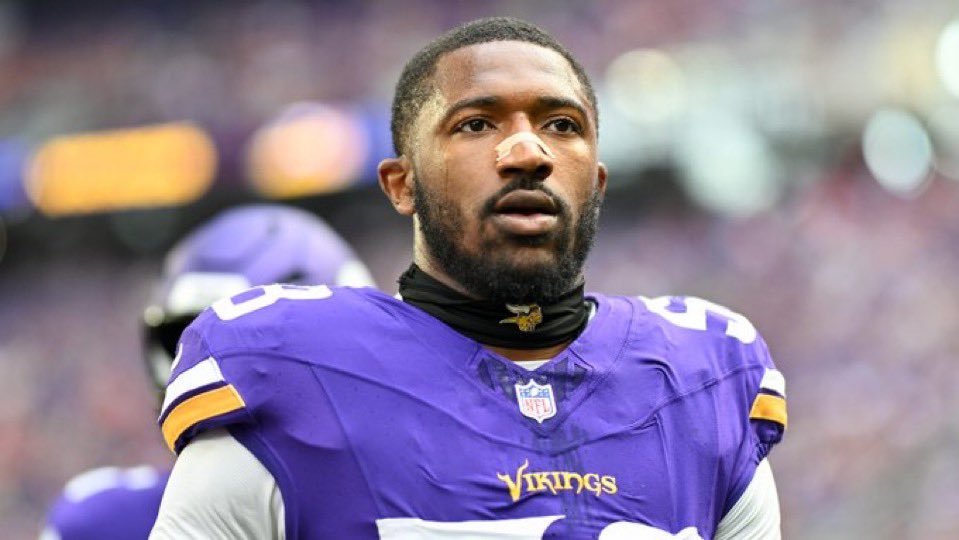
That pressure, however, falls on a player who authored one of the most unique defensive seasons in recent NFL history. Andrew Van Ginkel, who joined Minnesota alongside Greenard in 2024, achieved a statistical feat no other player in the league matched last season. Despite playing in only 12 games, Van Ginkel recorded at least 10 tackles for loss and 10 passes defended, a combination of elite pass rush and coverage versatility unmatched by stars like Micah Parsons or Myles Garrett.
Van Ginkel’s unique skill set provides a crucial safety net for the Vikings’ defense. In his first season in purple, he posted 11.5 sacks and returned two interceptions for touchdowns. Last year, despite a five-game injury absence, he still managed 7 sacks and another interception. His ability to seamlessly drop into coverage like a defensive back while maintaining a potent pass rush makes him the cornerstone of Flores’s plans if Greenard is moved.
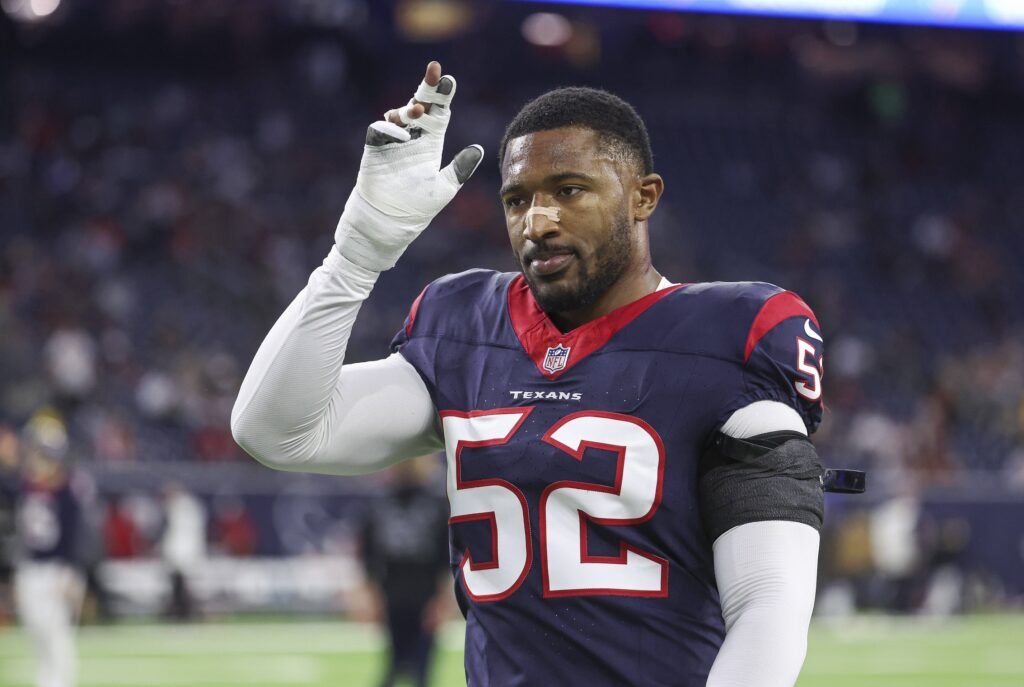
The potential trade would also thrust 2024 first-round pick Dallas Turner into a featured role. Turner led the team with 8 sacks in 2025 and has shown flashes of the dominance that made him a top selection. A duo of Van Ginkel and Turner offers a different, but potentially equally potent, dynamic for a defense that cannot afford to regress. The decision on Greenard must be made quickly, with the draft looming as a key deadline for any transaction.
While the defense faces potential upheaval, the Vikings’ quarterback room demonstrates remarkable stability by choice, turning away a significant external opportunity. Veteran quarterback Carson Wentz, who re-signed on a one-year deal worth up to $3 million, had a genuine chance to join the New York Jets but chose to remain in Minnesota. The Jets, with new offensive coordinator Frank Reich pushing for a reunion, actively sought Wentz for his familiarity with their system.
Wentz’s decision to spurn the Jets and stay with the Vikings as a backup speaks volumes about the environment General Manager Kwesi Adofo-Mensah and Head Coach Kevin O’Connell have cultivated. Wentz looked at the roster—featuring weapons like Justin Jefferson and Jordan Addison, a formidable offensive line, and Flores’s attacking defense—and determined it was the superior situation, even without a clear path to start.
His return creates one of the most intriguing and crowded quarterback rooms in the NFL. Wentz, with a base salary of $1.545 million, is currently the highest-paid quarterback on the roster, just ahead of Kyler Murray ($1.3 million), J.J. McCarthy ($1.075 million), and rookie Max Brosmer ($1.05 million). This structure emphasizes maximum competition and financial flexibility as the team navigates the preseason.
O’Connell has stated that if all four quarterbacks are present for training camp, Wentz would enter as the QB3, behind Murray and McCarthy. However, the offseason has proven that the quarterback market remains fluid, and no scenario is completely off the table. Wentz provides experienced, battle-tested insurance; he started five games in 2025, playing through a significant shoulder injury to keep the Vikings competitive in a playoff chase.
As the team solidifies its depth behind center, a strategic and affordable opportunity to add a dynamic weapon for the offense has surfaced. With the departure of deep threat Jalen Naylor to Las Vegas, the Vikings’ receiver corps behind stars Justin Jefferson and Jordan Addison lacks proven depth. A proposed trade solution, however, could address that need with minimal risk.
Analysts are predicting the Buffalo Bills may trade young wide receiver Keon Coleman to Minnesota, a move that presents compelling logic for both franchises. Coleman, a 2024 second-round pick, possesses elite physical tools at 6’4” and 215 pounds, with a catch radius that made him a red-zone nightmare during a 556-yard, four-touchdown rookie season. His 2025 campaign, however, saw him fall out of favor in Buffalo, leading to multiple healthy scratches.
At just 22 years old, Coleman’s raw talent remains undeniable. A change of scenery to an offensive system like O’Connell’s, paired with a precise quarterback like Murray or McCarthy, could unlock his immense potential. As a potential WR3, his size and vertical ability would create mismatches that complement the route-running excellence of Jefferson and Addison, particularly inside the 20-yard line.
The cost for such a gamble is remarkably low—projected to be a Day Three draft pick. The Vikings hold nine selections in the 2026 draft, including four in the top 100. Surrendering a sixth or seventh-round pick for a player of Coleman’s pedigree and age is a calculated bet with virtually no downside. If he thrives, the offense becomes multidimensional; if he doesn’t, the cap hit and lost asset are negligible.
For Buffalo, it represents a chance to recoup some value for a player who does not fit their long-term plans and clear a roster spot for a draft pick of their choosing. The trade window, however, may not stay open indefinitely. If Minnesota hesitates, another NFC team could secure the young receiver, leaving the Vikings to search for a different solution for their offensive depth chart.
These converging storylines paint the picture of a franchise operating with boldness and precision on the edge of contention. This is not a rebuild; it is a strategic consolidation of talent. The Vikings boast a quarterback room with unprecedented depth, a defense built on unique versatility, and an offense poised to add another explosive element. The decisions made in the coming days regarding Greenard and a potential move for Coleman will set the trajectory for the 2026 season.
The NFC North landscape is shifting. While Green Bay maneuvers financially, Detroit enjoys offseason hype, and Chicago continues its long-term project, Minnesota is assembling a roster with a singular focus: domination. The Vikings’ combination of experienced quarterback insurance, defensive innovation, and offensive firepower positions them as a formidable threat. How they navigate the next 72 hours could determine whether they seize control of the division early or face a season-long battle against the consequences of inaction. The storm is building in Minneapolis, and the entire league is watching.
Rumors are heating up fast around a potential game-changing addition.
