The simmering tension between the San Francisco 49ers and Los Angeles Rams has erupted into a public and pointed dispute over the NFL’s international schedule. Head Coach Kyle Shanahan, in remarkably candid remarks, has accused the Rams of lobbying the league to move their scheduled home game against the 49ers from SoFi Stadium to Australia, a move he calls “bothersome” and one he intends to counter with a demand of his own.
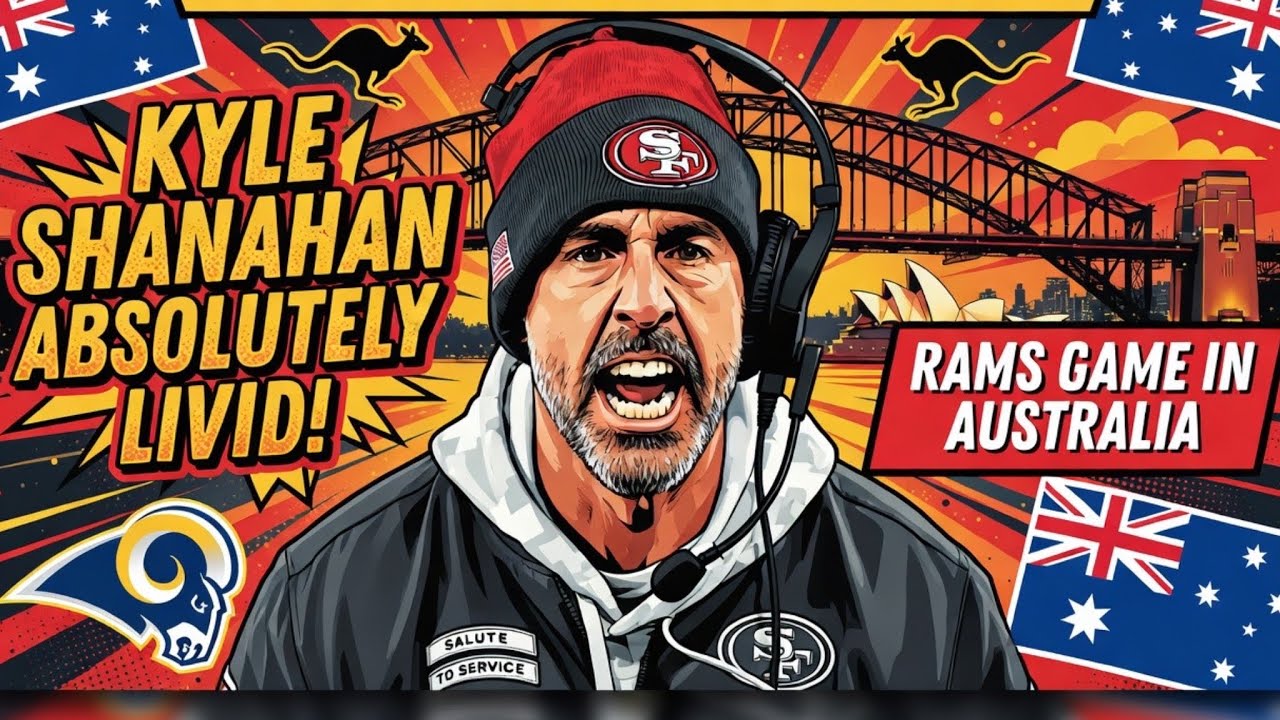
Shanahan’s explosive comments came during a relaxed media session at the annual league meetings, where he was seemingly baited into the topic by fellow coaches. Without hesitation, he confirmed the widespread speculation. “I know for a fact they did,” Shanahan stated, referring to the Rams’ alleged lobbying efforts. His frustration stems from the competitive and logistical imbalance created by the decision, which forces the 49ers to play two games outside the United States this season.

The core of Shanahan’s grievance lies in the well-documented demographic reality of the NFC West rivalry. For years, 49ers fans have flooded SoFi Stadium when the team visits Los Angeles, often turning Rams home games into de facto San Francisco gatherings. This phenomenon has been a source of embarrassment for the Rams organization and a tangible competitive disadvantage, forcing them to use silent snap counts in their own building.
“I get their ambitions,” Shanahan conceded, acknowledging the Rams’ desire to avoid another hostile home environment. “But they were rewarded for that.” His proposed remedy is a direct shot across the bow: he now wants the NFL to schedule the 49ers’ home game against the Rams in Mexico City. “It’s just fair to make them go out of the country,” he argued, framing it as a matter of equity rather than seeking an advantage.

This proposal is strategically shrewd. The 49ers boast a massive and passionate fan base in Mexico, meaning a game at Estadio Azteca would likely replicate the SoFi dynamic in reverse, offering San Francisco a true home-field advantage abroad. Shanahan enthusiastically praised the “awesome” Mexican fan base, invoking the “Bang Bang Niner Gang” mantra, signaling this is both a business and football consideration.
The revelation and Shanahan’s fiery response have ignited a debate about fairness, competitive integrity, and the growing influence of the NFL’s international series on competitive balance. While moving games abroad is a lucrative global growth strategy for the league, coaches are primarily judged on wins and losses, and any perceived disruption to preparation or schedule is met with intense scrutiny.
Shanahan’s bluntness is a departure from the typically guarded rhetoric of NFL head coaches, underscoring his genuine irritation. He framed the issue purely from a football perspective, questioning what benefit, if any, the arduous trip to Australia provides his team. The additional international travel, time zone disruption, and recovery process are viewed as a clear detriment to player performance and preparation.
The league office now faces a delicate public relations situation. While it has not commented on Shanahan’s specific allegation about the Rams’ lobbying, the NFL must navigate the fallout from a high-profile coach openly accusing a division rival of manipulating the schedule for competitive gain. Shanahan’ “request” for a Mexico City game against the Rams will undoubtedly land on the desk of the league’s scheduling committee.
This incident also highlights the personal dynamics at play among coaches. The session where Shanahan spoke included Green Bay Packers Head Coach Matt LaFleur, a close friend, who appeared to knowingly steer the conversation toward the sensitive topic. This suggests Shanahan’s feelings on the matter were an open secret among the coaching fraternity, waiting for the right moment to surface.
For the Rams, the public accusation paints them in a defensive light, potentially validating long-standing narratives about their struggle to establish a dominant home-field presence in Los Angeles. Their decision, if Shanahan’s claim is accurate, prioritizes avoiding a hostile crowd over the traditional benefits of home games, a tacit admission of a significant organizational challenge.
The ramifications extend beyond this single season. Shanahan has set a precedent by publicly challenging the fairness of the international schedule process. His stance may empower other coaches to voice similar concerns if they feel their teams are being disproportionately burdened by global games, potentially forcing the league to develop more transparent and equitable criteria for selecting teams and opponents.
Fans of both teams have reacted passionately online, with 49ers supporters rallying behind their coach’s combative stance and Rams fans defending the organization’s right to seek any allowable competitive edge. The story has transcended typical preseason chatter, becoming a major point of contention that will add even more fuel to one of the NFL’s most heated rivalries.
As the NFL continues its global expansion, balancing commercial ambitions with sporting integrity remains a complex challenge. Kyle Shanahan’s outburst is a stark reminder that for those on the sidelines, the game is always the primary focus. His demand for reciprocal treatment—a Rams road game in Mexico—is now a central part of the narrative, ensuring this scheduling dispute will linger long after the teams touch down in Australia.
The league’s response, or lack thereof, to Shanahan’s allegations and his pointed proposal will be closely watched. It tests the NFL’s ability to manage internal conflict between franchises while promoting its international brand. One thing is certain: when the 49ers and Rams finally meet on the field, whether in Australia, Los Angeles, or potentially Mexico City, the stakes will feel even higher, with the echoes of this very public spat reverberating through the stadium.
Frustration is boiling over as the rivalry takes a new international twist.
