The Green Bay Packers have emerged from the first furious wave of 2026 NFL free agency with a significantly reshaped roster, executing a series of calculated trades, targeted signings, and difficult departures that signal a clear strategic pivot under General Manager Brian Gutekunst. A week of high-stakes maneuvering has addressed critical defensive deficiencies while creating new questions on the offensive side of the ball, leaving the franchise with a mixed report card as the league year settles.
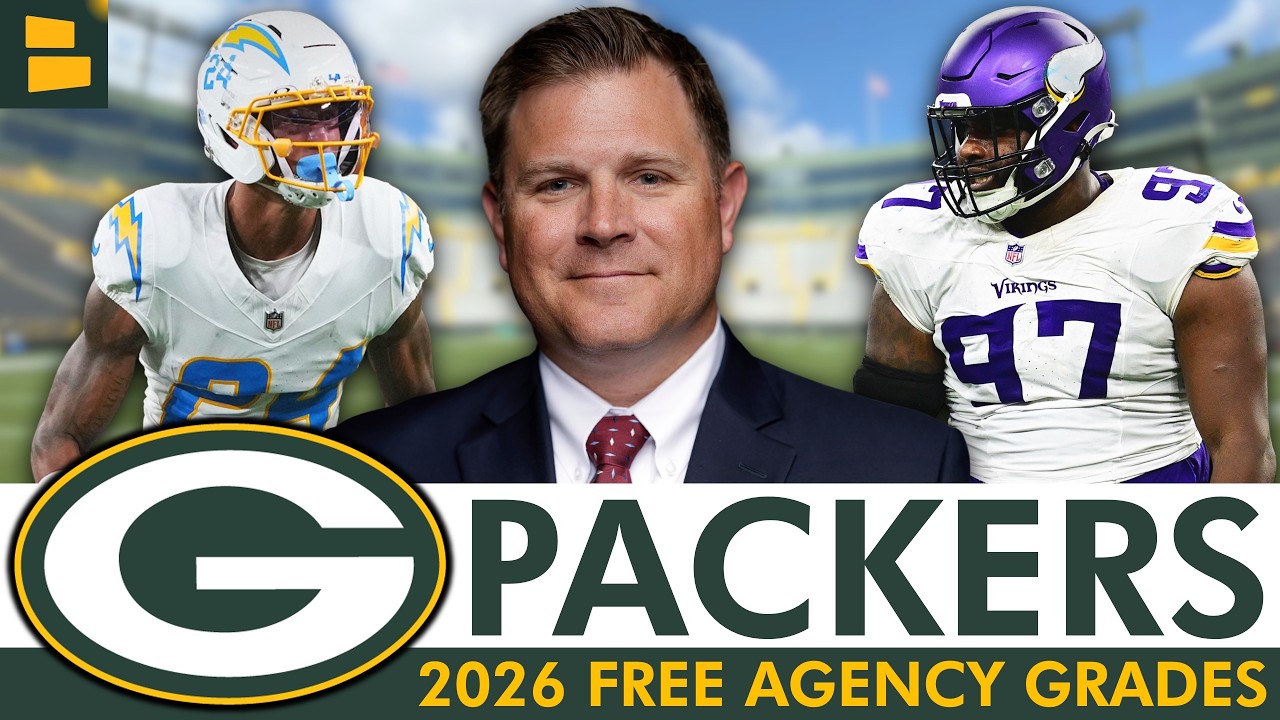
Headlining the Packers’ aggressive push is the seismic acquisition of veteran defensive tackle Javon Hargrave, formerly of the division-rival Minnesota Vikings. The two-year, $23 million deal immediately injects proven talent into the interior defensive line, a unit deemed a glaring weakness following a disappointing 2025 campaign. Hargrave brings a versatile skill set capable of disrupting both the run and pass, a cornerstone addition for defensive coordinator Jeff Hafley’s scheme.
In a rare player-for-player swap, Green Bay fortified its linebacker corps by sending young defensive tackle Kobe Wooden to the Indianapolis Colts in exchange for standout linebacker Zaire Franklin. This move directly replaces the departed Quay Walker, who signed a lucrative deal with the Las Vegas Raiders, and provides what many analysts see as an upgrade at a more team-friendly salary. Franklin’s arrival brings immediate physicality and leadership to the second level of the defense.
Special teams, a unit that plagued the Packers throughout last season, received a major boost with the signing of return specialist Skyy Moore. On a cost-effective one-year contract, Moore is expected to stabilize a return game that became a liability, exemplified by the surreal sight of running back Josh Jacobs fielding kicks in a critical late-season game. This signing has been praised as a long-overdue prioritization of the third phase.

The secondary added length and depth with cornerback Benjamin St. Juste, who joins on a two-year pact. While viewed as a rotational piece rather than a definitive starter, his size and scheme fit under Hafley provide necessary insurance and competition in the defensive backfield. The team also ensured continuity by re-signing core veterans, most notably center Sean Rhyan to a three-year, $33 million extension, a move that has sparked debate regarding its value relative to other available linemen.
However, the week was equally defined by notable exits, some more painful than others. The offensive line suffered a significant blow with the departure of stalwart guard Elton Jenkins, who signed with the Cleveland Browns. The receiving corps lost Romeo Doubs to New England, and the trade of running back Rashad Gary to the Dallas Cowboys—a transaction that netted a surprising fourth-round draft pick for a player reportedly on the cut line—stands as a masterstroke of asset management.
Other key departures include safety Malik Willis landing a major deal with Miami, linebacker Kingsley Enagbare joining the New York Jets, and tackle Rasheed Walker’s somewhat disappointing one-year, $10 million agreement with Carolina, which cost Green Bay a potential higher compensatory draft pick. The cumulative effect of these losses, particularly along the offensive line and at skill positions, leaves clear vacancies that the front office must now address through the draft and remaining free agency.
Early grades on the Packers’ overall free agency performance lean positive but cautious. The aggressive fixes on the defensive interior and at linebacker, coupled with the special teams overhaul, are seen as direct and necessary responses to last year’s failures. The acquisition of Hargrave and the trade for Franklin are universally lauded as savvy, impactful moves.
Yet, a sense of incompletion lingers. The offensive line, beyond the Rhyan re-signing, appears weakened. The weapons around quarterback Jordan Love have diminished, and several depth chart holes remain unplugged. While the team successfully navigated the first week with fiscal discipline and targeted aggression, the roster reconstruction is only partially complete.
The true final grade for the Packers’ 2026 free agency period remains pending. It hinges on the organization’s ability to leverage its draft capital and remaining cap space to fortify the offensive trenches and replace the lost production at wide receiver and running back. For now, Gutekunst has earned credit for a bold defensive overhaul, but the mission to return to championship contention is far from accomplished. The coming weeks will determine if this was the start of a masterful team build or a case of solving one problem while inadvertently creating another.
As the offseason unfolds, analysts are beginning to evaluate how Green Bay has handled free agency. From signings to departures, each move is being closely examined to determine whether the team is building toward contention or taking a different approach.
