A single, almost invisible shift on the pitching rubber may have unlocked the New York Yankees’ most critical early-season weapon. With the rotation decimated by injuries, right-hander Will Warren has emerged from spring training not as a placeholder, but as a transformed starter, delivering six dominant innings and forcing the organization to reconsider his ceiling.

The scene was Joker Marchant Stadium in Lakeland, Florida, a spring training backdrop that turned profound when Warren, 26, arrived to find Justin Verlander warming up. Warren’s composed reaction—a respectful step aside before his own work began—foreshadowed the statement he would make on the mound. He proceeded to log six full innings, a volume in spring training that screams readiness.

The foundation of this breakout is a mechanical tweak so simple it belies its impact. This offseason, Warren shifted his positioning on the rubber, moving 17 inches from the first-base side to the third-base side. This adjustment is not an experiment, but a return to his collegiate roots at Southeastern Louisiana University.
The Yankees’ pitching staff didn’t introduce a foreign concept; they guided him back to a familiar, successful foundation. The result has been a dramatic sharpening of his entire arsenal and a newfound confidence against left-handed hitters, his primary weakness in 2025.
Manager Aaron Boone took immediate notice following a 4-3 win over Detroit. Boone stated Warren looks “another year along in his development,” a significant and deliberate endorsement from a typically reserved manager during spring exhibitions. The numbers validate Boone’s assessment.
Through his initial spring outings, Warren boasts a 1.42 ERA, has issued zero walks, and is striking out batters at a 29.2% clip. His fastball, with elite extension that makes it play faster than its 93.3 mph velocity, and his sweeper, spinning at over 3,300 RPM, have become weapons. All five of his pitches have graded as above-average.
This evolution is crucial when examining Warren’s 2025 season, which was defined by frustrating inconsistency. He made 33 starts, posting a 4.44 ERA, but held opponents to three earned runs or fewer in 24 of those outings—a 73% quality start rate.
The problem was the other nine starts, where trouble snowballed. Boone specifically cited emotional control and slowing the game down as mental reps Warren needed. The mechanical fix directly addresses the statistical root: left-handed hitters battered him for a .786 OPS last year.
By moving across the rubber, Warren now attacks lefties with a wider, more deceptive angle. He has targeted them deliberately this spring, noting after one outing, “I got a bunch of lefties today. Threw the whole kitchen sink at them.” The early returns suggest the gap is closing.
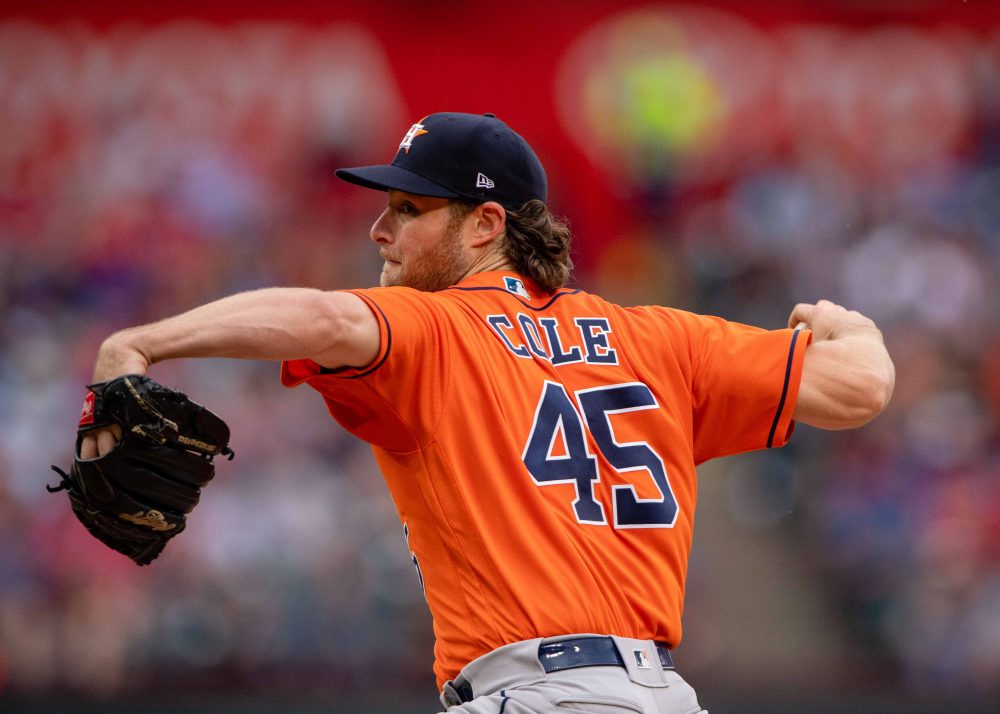
The context of the 2026 Yankees’ rotation magnifies Warren’s importance. With Gerrit Cole, Carlos Rodón, and Clarke Schmidt all rehabilitating from surgeries, the early-season burden is immense. Max Fried is the confirmed ace, followed by postseason standout Cam Schlitler.
Warren is now the confirmed third starter, with Ryan Weathers and Luis Gil rounding out the initial five. He is not merely an arm filling a slot; he is the linchpin preventing the rotation from collapsing before the cavalry arrives in the summer.
This development mirrors the path of the now-injured Clarke Schmidt, who made a similar leap in the spring of 2024 before his elbow failed. Warren, however, does not have the luxury of time. The Yankees need his transformation to be immediate and real.
Scenarios for his 2026 season are coming into focus. In an optimistic case, the adjustment holds, the split against lefties narrows, and he eliminates the blow-up outings. Converting even half of last year’s nine poor starts into quality efforts could drop his ERA into the mid-3.00s, making him a genuine mid-rotation weapon.
A more conservative outcome still holds value: Warren becomes a reliable innings-eater who consistently keeps the team in games, preserves the bullpen, and provides stability until the stars return. The Yankees do not need him to be an ace; they need him to be a competent anchor.
The bottom line is a testament to player development. Faced with glaring vulnerabilities and immense pressure, Warren and the coaching staff identified a subtle flaw and corrected it. Moving 17 inches on the slab has changed the angle of his pitches, the trajectory of his season, and potentially the fortunes of the Yankees’ battered rotation in the critical early months.
Warren has shifted from question mark to cornerstone. As the team breaks camp, his spring performance is no longer just a promising story; it is a necessary reality for a team with championship aspirations navigating a minefield of injuries. The hidden ace has been unlocked, and his timing could not be more perfect.
A standout pitching performance has fans wondering if the Yankees have quietly discovered a new difference-maker. After delivering six impressive innings, the rising arm is now being discussed as a potential postseason weapon. The question is whether this breakout moment is sustainable or just a glimpse of what could be coming.
