The New York Yankees have ignited a firestorm of controversy and fan frustration with a pivotal roster decision, opting to send top outfield prospect Spencer Jones to Triple-A Scranton/Wilkes-Barre. This move, announced just prior to a spring training game, signals a conservative approach that prioritizes veteran contracts over promising youth, leaving the organization’s immediate future in center field squarely on the shoulders of the struggling Trent Grisham.

Jones, the Yankees’ seventh-ranked prospect and a 24-year-old powerhouse, forced the issue with a spectacular spring performance. In nine games, he slashed .333/.500/.844 with three home runs, seven RBI, and a staggering 1.344 OPS while demonstrating capable defense across the outfield. His exhibition campaign was a loud, undeniable statement that he was ready for the major league stage, a sentiment echoed privately and publicly by team captain Aaron Judge.

Despite this, the Yankees’ front office, led by General Manager Brian Cashman, has chosen a path of financial obligation over potential transformation. The logjam stems from two significant offseason commitments: the $20 million qualifying offer to Trent Grisham and the lucrative multi-year deal for Cody Bellinger. With Judge anchored in right field, Bellinger slated for left and first base, and Grisham owed a substantial sum, the path for Jones and fellow top prospect Jasson Domínguez was effectively blocked.
This decision represents a stark philosophical shift for a franchise that once boldly inserted a young Aaron Judge into its lineup a decade ago, reaping historic rewards. The current strategy, perceived as overly safe and reactive, has left many questioning the organization’s commitment to developing its next homegrown core. Sending Jones down, despite his clear readiness, is viewed as a damaging blow to player morale and a mismanagement of elite talent.
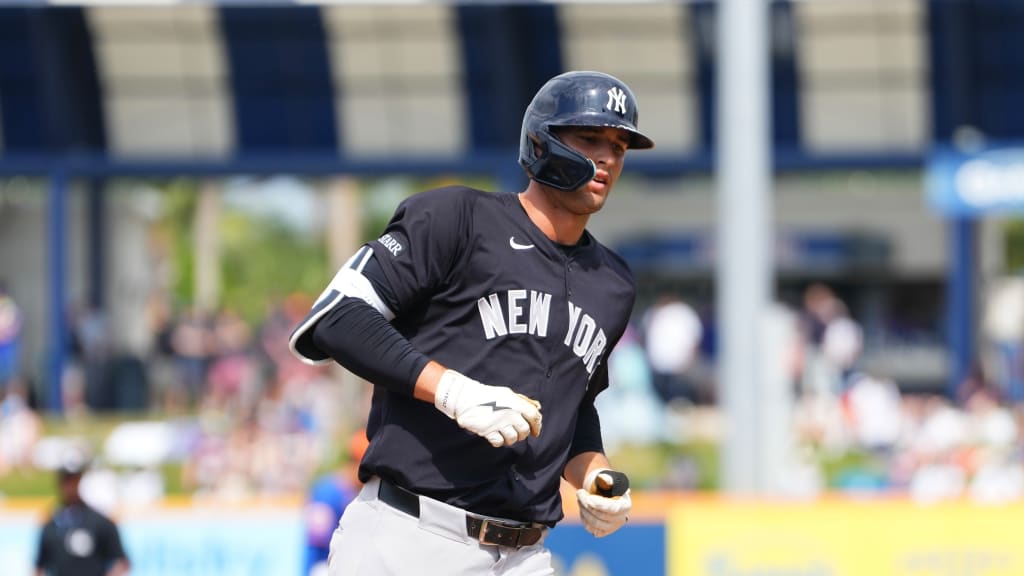
Manager Aaron Boone acknowledged the difficulty of the choice, praising Jones’s adjustments and performance while advising the young star to control what he can. The reality, however, is a major league outfield without a single homegrown Yankee regular under the age of 32. Grisham, who has struggled to hit above the Mendoza line this spring, now faces immense pressure to justify the team’s investment from the leadoff spot.
The implications extend beyond Spencer Jones. Jasson Domínguez, another electrifying talent, also finds his route to consistent playing time obstructed by the veteran glut. This creates a scenario where two of baseball’s most dynamic prospects will begin the season in the minors, their development timelines potentially delayed not by performance, but by roster calculus and financial inertia.
Fan reaction has been swift and severe, with many labeling the move a failure of vision. The ideal outfield alignment for a significant portion of the fanbase—Judge in right, Bellinger in left, and Jones in center—has been dismissed before the season even begins. Instead, the Yankees are betting on a rebound from Grisham, hoping his defensive prowess and occasional power can offset offensive inconsistencies.
This gamble carries significant risk. Should Grisham falter, the Yankees will be forced to either eat his salary or continue playing a suboptimal performer, all while their best prospects languish in Triple-A. In an era where rival organizations aggressively promote and build around their young stars, the Yankees’ caution appears increasingly anachronistic.
The decision underscores a broader tension within the organization: the conflict between a win-now mandate backed by high-priced veterans and the sustainable promise of a revitalized farm system. By choosing the former at the expense of the latter, the Yankees have made a definitive statement about their priorities for the 2026 campaign.
While a mid-season call-up for Jones remains inevitable barring a miraculous Grisham resurgence, the message sent is clear. For now, the future must wait. The Yankees are banking on established names over emerging talent, a strategy that will either vindicate the front office’s patience or haunt them as another team’s young star takes the league by storm.
The center field position, a perennial question mark in the Bronx, remains unresolved in the long term. The bridge provided by Trent Grisham is viewed by many as a toll paid in wasted potential. As the season opens, all eyes will be on Grisham’s performance, with every strikeout amplifying the calls for the prospect deemed too risky to trust. The Yankees have chosen their path, and the weight of that choice now rests on the shoulders of a veteran trying to reclaim his career, while the heir apparent watches and waits from Pennsylvania.
A sudden decision by the Yankees front office has caught both analysts and fans completely off guard. While the organization has yet to fully explain the reasoning behind the move, insiders suggest it could have significant implications for the roster and upcoming games. The surprise announcement has quickly become one of the most talked-about stories surrounding the team.
