The Green Bay Packers and the entire state of Wisconsin are in mourning following the death of Bob Harlan, the transformative former team president who rescued the franchise from obscurity and financial peril. Harlan passed away at the age of 89, leaving behind a legacy that forever altered the course of one of professional sports’ most iconic teams.

His passing marks the end of an era for an organization he fundamentally rebuilt from the ground up. Harlan’s tenure, which began in 1989, is credited with pulling the Packers from the brink of irrelevance and setting them on a path to sustained excellence and unprecedented financial security. The impact of his leadership continues to resonate through every facet of the franchise today.

Colleagues and players remember Harlan not only for his visionary decisions but for his profound decency. “He’s one of those guys… he is the nicest man,” said former Packers fullback and radio host John Kuhn, reflecting a sentiment echoed unanimously. “I’ve never heard anyone say a disparaging thing about the man. Everyone just loves him.”
Harlan’s most consequential move was hiring general manager Ron Wolf in 1991, a decision that sparked the Packers’ renaissance. Wolf, in turn, traded for a young quarterback named Brett Favre and signed defensive icon Reggie White. This series of actions, greenlit by Harlan, culminated in a Super Bowl XXXI victory, the team’s first championship in nearly three decades.
“The man that greenlighted it was Bob Harlan,” Kuhn stated emphatically. “So, you have all of that. He’s responsible for that.” This philosophy of empowering football experts became a cornerstone of his leadership. Harlan famously fought to keep the organization’s board of directors from meddling in personnel decisions, establishing a clear separation between business and football operations that endures.
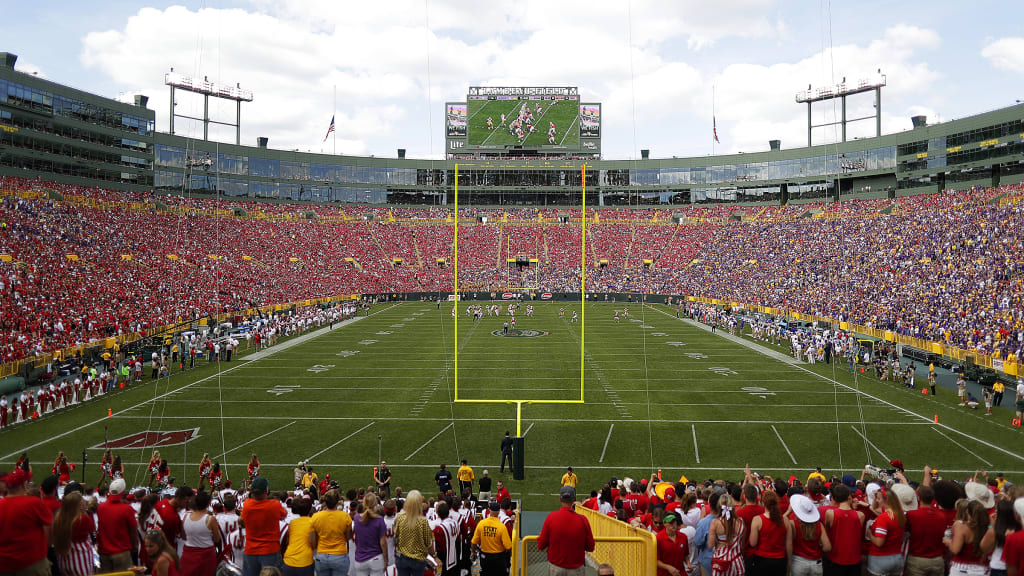
Beyond building a winner, Harlan saved the Packers for Green Bay. In the early 2000s, the team faced a critical juncture with the aging Lambeau Field in desperate need of renovation. The community-owned franchise required taxpayer support to fund the project, and its future in the small market was uncertain.
Harlan embarked on a relentless grassroots campaign, personally meeting with voters and community leaders. “He went door to door,” recounted radio host Gabe Neitzel. “He met with guys in factories. He was going to diners at night to make sure that renovation of Lambeau Field happened.” The referendum passed, securing $165 million and facilitating a transformation that ensured the Packers’ long-term viability.
That renovation laid the financial foundation for the modern Packers. The team now boasts a reserve fund approaching $600 million, and the threat of relocation has been erased. “The Packers leaving Green Bay doesn’t seem like it’s ever a possibility,” Neitzel said. “But it was a possibility… And because of Bob, that didn’t happen.”
Those who worked within the organization during Harlan’s presidency recall a uniquely familial atmosphere that has since faded in the NFL’s corporate era. Kuhn described a time when players, administrators, and even the president shared hallways and casual conversations. “You’d see Bob in the football area just going to get a sandwich… and he’d always stop and say, ‘Hey, how you doing? How’s your family doing?’”
Harlan’s commitment to providing first-class resources was unwavering. He famously asked his football staff simply, “What do you need?” and acted on their requests. This led to the construction of the state-of-the-art Don Hutson Center in 1993, a revolutionary indoor facility that was the envy of the league at the time. “No one ever gave him credit for that,” Kuhn noted, emphasizing Harlan’s characteristic humility.
That humility defined him. Colleagues stress that Harlan consistently deflected praise toward coaches, players, and executives, never seeking the spotlight despite being the architect of the Packers’ revival. “Bob never wanted credit,” Kuhn said. “And I’m not saying the presidents now do, but Bob was always like, ‘No, no, no, no, it’s the players and the coaches.’”
His leadership style stood in stark contrast to the micromanagement he despised. “The one thing about Bob is he never micromanaged anyone around him, beneath him,” Kuhn observed, drawing a subtle comparison to later administrations. Harlan’s approach was to hire the best people, give them the tools to succeed, and let them work.
The ripple effects of his decisions extend far beyond Lombardi Trophies and balance sheets. Media personalities acknowledged that their own careers in Wisconsin sports media are indirectly tied to Harlan’s stewardship, which revitalized interest in the Packers and created the ecosystem they now work within.
As news of his passing spreads, the reflection is on a legacy of salvation, stability, and quiet dignity. Bob Harlan inherited a franchise known more for its storied past than its present potential and left it as a gold-standard operation, both competitively and financially, forever rooted in its community. He was the steady hand that guided the Packers out of the wilderness, and his mark on the team is indelible. The family atmosphere may have evolved, but the fortress he built stands stronger than ever, a lasting monument to the man who saved the Green Bay Packers.
The story of Bob Harlan remains one of the most important chapters in the history of the Green Bay Packers. His leadership during a critical period helped stabilize the franchise and secure its future in Green Bay. As fans reflect on his legacy, many credit him with shaping the organization that exists today.
