The Green Bay Packers’ offensive staff has been dealt a significant blow with the departure of a key architect behind their recent success. Sean Manion, the team’s quarterback coach, is leaving to become the offensive coordinator for the Philadelphia Eagles, a move confirmed by multiple league insiders and the Eagles organization. This exit creates a critical vacancy around emerging star quarterback Jordan Love and signals a notable shift in the NFC coaching landscape.

Manion’s rise has been meteoric, and his work with Jordan Love this past season is widely considered a cornerstone of the Packers’ offensive resurgence. His departure to Philadelphia, where he interviewed twice for the coordinator role, represents both a promotion and a substantial loss for Green Bay’s continuity. The Eagles are explicitly seeking to integrate elements of the Packers’ offensive scheme, a testament to the respect Manion’s work has garnered across the league.
This move is the latest in a series of coaching changes for the Packers this offseason, creating a reshaped staff under head coach Matt LaFleur. The defensive side saw coordinator Jeff Hafley depart for Miami, leading to the hiring of Jonathan Gannon. Subsequently, defensive passing game coordinator Derrick Ansley is not returning after the team brought in Bobby Babich for that role. The staff also lost defensive backs coach Ryan Downer and linebacker coach Sean Duggan to the Dolphins, replacing the latter with Sam Cifus.
The immediate and pressing question now centers on who will step into the quarterback coach role to guide Jordan Love’s continued development. Internal candidates are already being discussed, with senior offensive assistant Luke Getsy emerging as a primary possibility. Getsy, who previously served as the Packers’ QB coach during Aaron Rodgers’ MVP seasons, offers experienced familiarity with the system. Another name mentioned within building is Connor Lewis, though he remains a less known quantity.

The external perception of these losses paints a clear picture of the league’s view of Green Bay’s coaching prowess. While some fans have expressed frustration over coaching decisions in recent seasons, the reality is that the Packers’ staff is being aggressively targeted by other franchises. This pattern of being “poached” is often interpreted as a sign of a well-respected and effective organization, not one in disarray.
Analysts point to the broader context of the Packers’ recent seasons when evaluating the coaching staff’s performance. The team has consistently fielded the youngest roster in the NFL while also managing an extraordinary volume of injuries, including nearly $100 million in cap space on injured reserve last season. Within that challenging environment, the development of Jordan Love and a playoff berth are viewed as significant achievements.
The discussion around replacing Manion also intersects with ongoing debates about the offensive structure. Some critics have questioned the role of offensive coordinator Adam Stenavich, particularly regarding offensive line performance and game tempo. However, supporters argue that play-calling ultimately rests with LaFleur and that personnel decisions, such as the signing of running back Josh Jacobs, dictate schematic adjustments. The offensive line’s struggles are often attributed more to player availability and roster construction than to pure coaching.
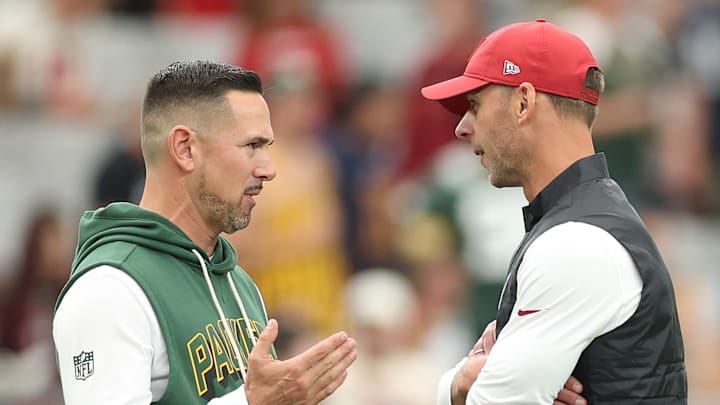
The departure of Sean Manion places a renewed spotlight on the partnership between head coach Matt LaFleur and General Manager Brian Gutekunst. As the coaching staff evolves, the pressure to provide that staff with robust, healthy talent intensifies. The organization’s ability to sustain offensive success hinges on finding a suitable replacement for Manion who can maintain the technical and strategic progress Jordan Love has shown.
This coaching transition arrives at a pivotal moment for the franchise. With Love entering the first year of a massive contract extension, ensuring his support system remains strong is paramount. The choice for the next quarterback coach will be scrutinized for its impact on Love’s footwork, decision-making, and overall command of the offense. The continuity of the offensive philosophy, even amidst staff changes, will be a key theme of the Packers’ offseason.

Fan reaction is mixed, blending concern over losing a valued coach with confidence in LaFleur’s overarching system. Some fear a regression in Love’s play, while others note that similar concerns were voiced last offseason when Tom Clements stepped back, only for Love and Manion to excel. The organization’s track record of cultivating coaching talent provides a measure of optimism that the next QB coach will be equally effective.
The Eagles’ gain is undeniably the Packers’ immediate challenge. Philadelphia identified Manion as the ideal candidate to revitalize their offense, leveraging his experience with a dynamic young quarterback. For Green Bay, the mission is to replicate their own successful development process. The search will likely balance institutional knowledge with fresh perspective, all under the pressure of championship expectations.
As the front office and coaching staff deliberate on this crucial hire, the broader NFL world recognizes the significance of the move. The Packers’ ability to seamlessly integrate a new voice into Jordan Love’s ear will be a telling factor for the 2024 season. The legacy of Sean Manion’s tenure will be measured by whether the offensive excellence he helped cultivate can continue unabated in his absence. This story remains developing, with the Packers’ next move carrying immense weight for their future trajectory.
