No music. No hero shots. Just blood, panic, and impossible decisions. Al Mampre reveals what combat medicine really looked like—and why survival often felt like a curse, not a victory.

In a stunning reflection on the harrowing experiences of World War II, Al Mampre, a medic from the famed “Band of Brothers,” recounted his gripping journey through combat in Europe. Mampre, who enlisted as a paratrooper in Texas, vividly described his first jump into a combat zone in Holland, where he faced life-and-death situations while treating injured soldiers. His powerful memories highlight the chaos and camaraderie of war, revealing the stark realities faced by those on the front lines.
Mampre’s journey began with basic training in Dallas and Georgia, where he transitioned from infantry to medic. His skills, initially honed as a Boy Scout, became crucial in the heat of battle. He recalled the primitive training methods, including administering shots using oranges, a stark contrast to the brutal realities of combat.
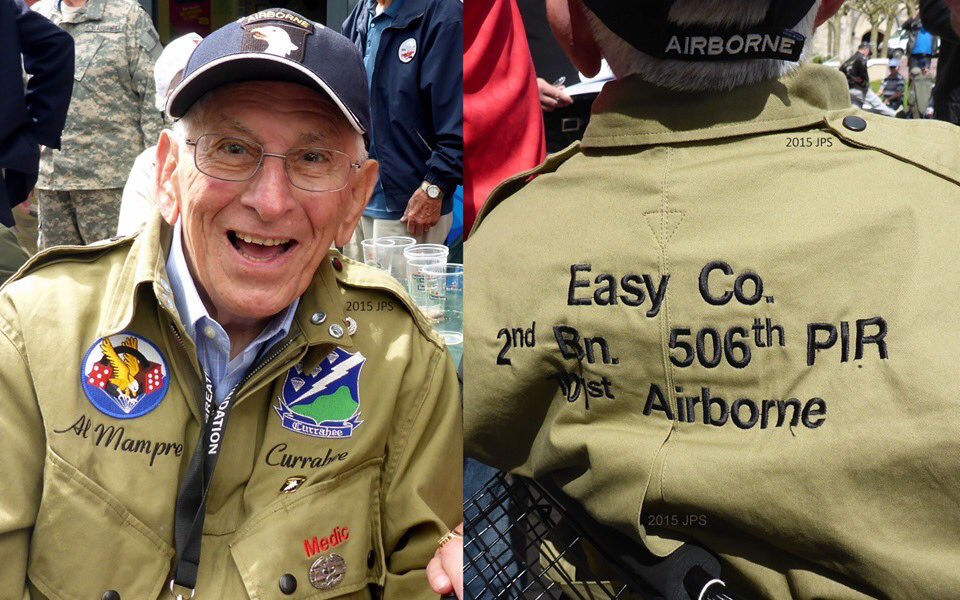
Describing his first combat jump, Mampre shared a chilling moment when a fellow paratrooper collided with his chute, forcing him to hit the ground hard. The urgency of the situation intensified when he encountered a wounded soldier, Lieutenant Brewer, shot in the neck. Mampre’s quick thinking and resourcefulness became paramount as he mixed plasma on the spot to save Brewer’s life.

As bullets whizzed around him, Mampre’s focus remained on his patients. He recounted a surreal moment when a local Dutch woman offered him cherries while gunfire erupted in the streets, a poignant reminder of the humanity that persisted amidst the chaos. The stark contrast of wartime horror and fleeting kindness left a lasting impact on him.
Mampre’s harrowing experiences continued as he navigated through enemy fire, treating multiple casualties while grappling with his own injuries. After being shot in the calf, he administered morphine to himself, showcasing the resilience and determination of medics on the front lines. With limited resources and constant danger, Mampre exemplified the true spirit of service.
His time in Bastogne was marked by near misses and the constant threat of artillery fire. Mampre vividly recalled a close call when a shell exploded nearby, narrowly avoiding disaster. The tension of war was palpable, yet he found moments of levity, including an encounter with a German soldier who humorously suggested they switch uniforms to escape the conflict.
Throughout his service, Mampre formed deep bonds with fellow soldiers, particularly under the leadership of Captain Dick Winters. The transition from ineffective leadership to a respected commander forged a strong camaraderie among the troops, ultimately contributing to their legendary status as the “Band of Brothers.”
Mampre’s reflections serve as a powerful reminder of the sacrifices made by those who served in World War II. His stories encapsulate the bravery, resilience, and humanity that emerged from the horrors of war, offering a glimpse into the lives of those who fought for freedom. As the world remembers their sacrifices, Mampre’s voice continues to resonate, reminding us of the profound impact of their experiences.
