The Green Bay Packers’ offensive struggles have ignited a fierce internal debate, and the solution appears far more complex than a simple coordinator change. In a revealing discussion, former players and analysts pinpoint a fundamental identity crisis plaguing the unit, suggesting the issues run deeper than any single coach.
 A cloud of uncertainty hangs over 1265 Lombardi Avenue, with no official announcements on coaching contracts or future plans. This silence fuels speculation about the direction of an offense that, despite a promising young quarterback in Jordan Love, failed to establish consistency last season. The conversation has shifted from blaming coordinator Adam Stenavich to examining foundational philosophical conflicts.
Analysts argue the core problem is a lack of coherent identity. “Do we want to be a run team? Do we want to be a Jordan Love passing team?” questioned one voice in the discussion. This indecision manifests on the field, leaving the offense without a reliable, go-to strength when games are on the line, as evidenced by critical second-half failures.
The roots of this crisis may trace back to a pivotal playoff loss two seasons ago. Following a defeat where the Philadelphia Eagles’ defensive line dominated, the Packers seemingly committed to a dramatic philosophical shift. The organization appeared to decide it needed to “get bigger” and more physical to compete, aiming to replicate a power-based model.
 This reaction, however, may have been a catastrophic overcorrection. The team began acquiring larger, “road-grading” offensive linemen, a move that directly conflicts with the outside-zone, stretch-running scheme that is the bedrock of Head Coach Matt LaFleur’s offensive system. That scheme relies on athletic linemen who can move laterally and reach the second level.
The result has been a disastrous mismatch. The personnel assembled do not fit the scheme the head coach is renowned for, creating a disconnect that undermines both the pass and run game. “You want to be able to throw the football with your $55 million a year quarterback, but the guys you bring in, that’s not really their mo,” one analyst stated, highlighting the fundamental flaw.
This identity schism likely stems from a concerning potential disconnect between the front office and the coaching staff. The critical question is whether General Manager Brian Gutekunst’s vision for a physical, downhill team aligns with LaFleur’s proven scheme. A failure to synchronize this vision creates the very “silos” of miscommunication that plagued previous eras in Green Bay.
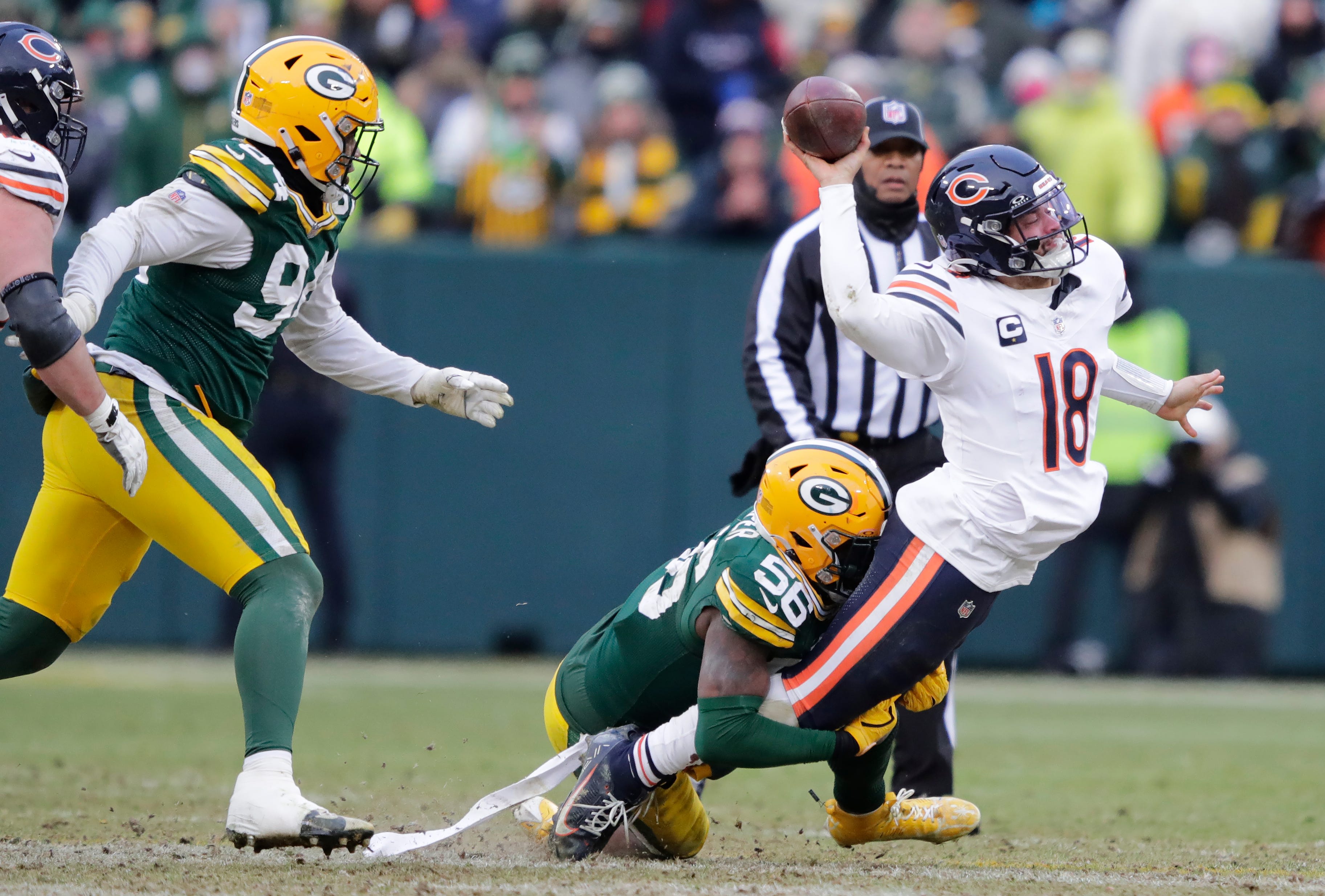
The ramifications are severe. The run game, intended to be a strength, became a glaring weakness for much of the season. Even the addition of star running back Josh Jacobs could not salvage it, as the blocking scheme and personnel were often at odds. This forced excessive pressure onto Jordan Love and the passing attack, which struggled to compensate consistently.
Solutions require decisive action from the top. New team President Ed Policy must ensure the general manager and head coach are unified in their offensive vision. From a personnel standpoint, the front office must prioritize acquiring offensive linemen whose athletic profiles fit the outside-zone system, moving away from the sheer size experiment.
For Matt LaFleur, the prescription is a return to his roots. Analysts urge him to revisit the film from his first several seasons in Green Bay, when the offense operated with clear, defensive-stressing principles. The system is designed to make defenses guess and run sideways, creating cutback lanes and opening the entire playbook.
The upcoming offseason presents a critical opportunity for correction. With several starting offensive linemen potentially departing, the team has a chance to rebuild the front five with the correct prototype. Competition must be fierce, and the standard must be raised after a season of unacceptable performance.
Ultimately, the fate of the Packers’ high-potential offense rests on resolving this foundational conflict. The team must choose an identity and commit fully, ensuring every personnel decision and play call works in concert. The talent at quarterback and skill positions is too great to be wasted on a unit that doesn’t know what it wants to be. The time for philosophical clarity is now.
