In a shocking revelation that echoes through the annals of history, the brutal method of execution known as “blowing from a cannon” has resurfaced in discussions on the darkest practices of colonial rule. This horrific punishment, used predominantly during the British colonial period in India, involved tying a condemned individual to the mouth of a cannon and firing it, resulting in an explosive and gruesome spectacle meant to instill terror among the populace.
 Originating in the Mughal Empire during the 16th and 17th centuries, blowing from a cannon was a dramatic method employed by rulers to suppress rebellion and assert dominance. Traditional execution methods, such as hanging or beheading, paled in comparison to the visceral horror of a cannon blast, which obliterated the human body in an instant. This brutal punishment was not merely about ending a life; it was a calculated act of psychological warfare, designed to send a chilling message to potential dissenters.
The mechanics of this execution were disturbingly straightforward. A field cannon was prepared, loaded with gunpowder but no cannonball, as the condemned person served as the projectile. Tied directly to the cannon’s mouth, victims faced a fate that was both violent and public. Eyewitness accounts describe the horrifying aftermath, with body parts scattered and the shockwaves of the blast leaving witnesses in a state of disbelief. The sheer terror induced by such an execution was compounded by its public nature, where crowds were forced to witness the destruction of a human form, amplifying the fear of disobedience.
Particularly alarming was the spiritual impact of this punishment. For Hindus, the scattering of a body disrupted the sacred funeral rites necessary for the soul’s passage to the next life. For Muslims, the absence of a proper burial was seen as a denial of entry into paradise. This dual assault on both physical existence and spiritual beliefs made blowing from a cannon one of the most feared forms of execution among Indian soldiers and rebels.
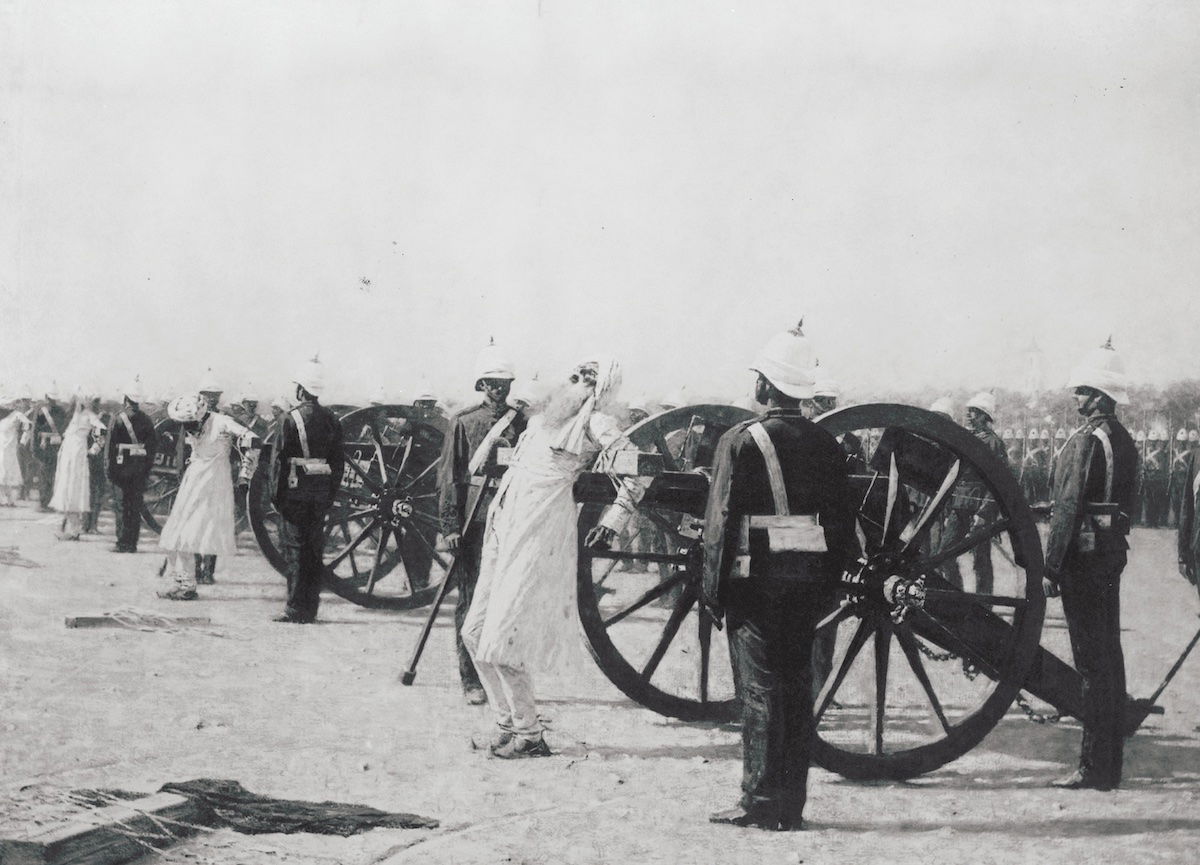
The British East India Company, upon expanding its control, adopted this brutal practice during times of rebellion, most infamously during the Indian Rebellion of 1857. As the uprising unfolded, British commanders resorted to this shocking method to reassert authority, ensuring that the consequences of mutiny were vividly etched into the collective memory of the populace. Eyewitnesses recounted the harrowing scenes, where rebels were tied to cannons in front of crowds, their bodies torn apart in a display of ruthless power.
As the 19th century progressed, the use of blowing from a cannon became increasingly rare, falling out of favor amid growing criticism. By the late 1800s, the British government largely abandoned this method, opting for more conventional forms of execution. However, the legacy of this gruesome punishment lingers, a haunting reminder of the extremes to which empires would go to maintain control.
Today, the chilling image of a rebel being blown from a cannon serves as a stark reminder of the violent lengths to which rulers have gone in the name of power. This brutal execution method stands out not only for its cruelty but for its profound psychological implications, illustrating how the act of execution transcended mere death to become a tool of domination and fear. As discussions on historical atrocities resurface, the story of blowing from a cannon remains a powerful testament to the dark chapters of colonial rule, reminding us of the true cost of power and control.
