The Miami Dolphins have officially received their 2026 NFL Draft report card from ESPN’s Mel Kiper Jr., and the grade is a solid B, matching the assessment from Dolphins Today by Chat Sports. But the consensus on the overall score masks a deeper debate about the team’s strategy, particularly at wide receiver, where Kiper has raised serious concerns about the franchise’s ability to support new quarterback Malik Willis. With 13 total picks, Miami was one of the most active teams in the draft, but Kiper’s analysis reveals a mixed bag of high-ceiling selections and puzzling omissions that could define the franchise’s trajectory for years to come.
 The Dolphins entered the draft with glaring needs across the roster, and Kiper acknowledged that wide receiver was the most pressing issue. However, he expressed disappointment that Miami did not address the position with its first-round picks, instead opting for offensive tackle Caden Proctor at number 12 overall and trading up to select cornerback Chris Johnson later in the first round. Kiper noted that while Proctor brings elite quickness and experience from Alabama, the decision to pass on playmakers like safety Caleb Downs and edge rusher Reuben Bain was a tough pill to swallow. The Dolphins did net two fifth-round picks by moving back, which later allowed them to select wide receivers Kevin Coleman Jr. and Seydou Traore, but Kiper argued that this was not enough to transform a thin receiving corps.
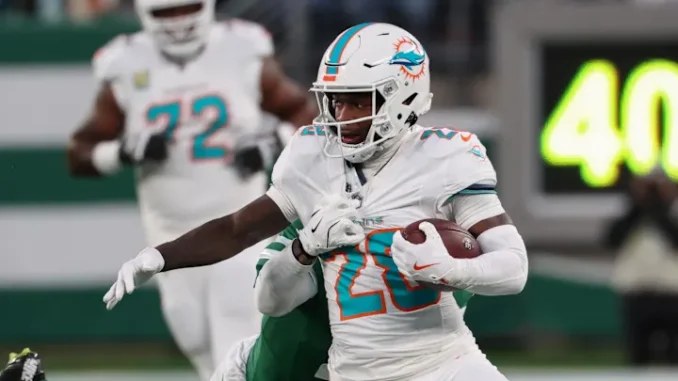
Proctor’s versatility is a key point of contention. Kiper praised the 6-foot-7, 350-pound lineman’s ability to potentially shift to right tackle, but analysts on Dolphins Today have projected him as a starting left guard. The offensive line configuration is one of the most intriguing storylines of the offseason, with players like Jona Savaiinaea, Austin Jackson, and Jamaree Salyer all capable of playing multiple positions. The idea of Proctor lining up next to left tackle Patrick Paul creates a massive, intimidating front, but the question remains whether Miami is maximizing its investment by moving him inside. Kiper emphasized that Proctor’s ceiling as a potential All-Pro tackle could be more valuable than a star safety or edge rusher, but the immediate impact on the passing game is uncertain.
The cornerback room was in shambles entering the draft, and Kiper fully endorsed Miami’s aggressive move to trade up for Chris Johnson, whom he ranked as the third-best cornerback in the class behind only Joey Porter Lane and Jamar McCoy. Johnson’s ball skills and ability to start immediately are seen as a lifeline for a secondary that struggled mightily last season. The trade cost Miami a drop from pick 90 to 138, but Kiper called it 100 percent worth it, especially given the depth of the draft class. This move was widely praised as the best pick of the draft by Dolphins Today, with Johnson expected to lock down a starting role from day one.
The wide receiver debate has become the central flashpoint of Kiper’s critique. He singled out Caleb Douglas as a reach in the third round, while acknowledging that Chris Bell, despite coming off a torn ACL, possesses first-round talent when healthy. Bell’s ability to produce over the middle, downfield, and after the catch is tantalizing, but Kiper argued that the Dolphins still lack a proven number one receiver. Malik Washington and Jaylen Tolbert are currently projected as the top two options, which Kiper described as an issue for Willis’s development. However, the Dolphins Today host pushed back, noting that Miami drafted three wide receivers total, including Kevin Coleman Jr., who could challenge for the starting slot role. The host suggested that Kiper was both right and wrong, as the volume of picks does not guarantee quality, and Bell’s recovery timeline means he may not be ready until October.
The linebacker unit emerged as the unexpected strength of the draft class, and Kiper singled out Jacob Rodriguez and Kyle Lewis as transformative additions. Rodriguez, the Big 12 Defensive Player of the Year and a Heisman finalist, was selected in the second round and is expected to make an immediate impact. Lewis, a safety-linebacker hybrid taken in the fourth round, was described as a baller who will line up all over the field. Combined with All-Pro Jordan Brooks, this trio could form the best linebacker room in the NFL, according to Dolphins Today. The ability to deploy Lewis in a big nickel role allows Miami to keep all three on the field without sacrificing coverage, a luxury that could redefine the defense’s identity. Kiper agreed, calling Lewis one of the biggest steals of the draft and praising Rodriguez’s productivity.
The defensive additions did not stop there. Miami loaded up on day three with players like Trey Moore, Kyle Lewis, Michael Taft, and Max Llewellyn, the latter of whom was described as a steal at edge in the seventh round. The emphasis on defensive talent reflects a broader strategy to build a multiple scheme capable of shifting between 3-4 and 4-3 looks. The Dolphins Today host argued that this depth could make the defense a top-tier unit, especially with the versatility to handle nickel and dime packages. The ability to stop the run and cover in open space with Lewis on the field is a game-changer, and the excitement around this group is palpable.
Kiper’s final assessment acknowledged that Miami made 13 picks, many of whom will be forced into action in 2026 whether they are ready or not. This reality underscores the team’s rebuilding phase, as they are not competing for a Super Bowl this season. The only priorities are developing culture, building a locker room, and seeing improvement from Willis and the young core. The Dolphins Today host agreed with the B grade but noted that swapping out Caleb Douglas for a player like Chris Brazell or Ted Hearst could have elevated the class to an A-minus. The host also admitted that passing on Caleb Downs or Reuben Bain in the first round remains a lingering regret, but optimism about Proctor’s ceiling keeps the overall outlook positive.
The wide receiver situation remains fluid, and Kiper’s criticism has sparked a debate about whether Miami should sign a free agent like Juwan Jennings. The Dolphins Today host expressed openness to such a move at the right price, emphasizing that the team should not rush Chris Bell back from his ACL injury. Letting Bell sit the first three to four weeks of the season would allow him to ease into the NFL without risking long-term damage. Meanwhile, the other rookie wide receivers are major question marks, and the depth chart is far from settled. The offensive line configuration, the emergence of the linebacker corps, and Willis’s development will be the three biggest storylines of the offseason.

The Dolphins Today host concluded by reiterating that the B grade is fair, but the path to that grade was different from Kiper’s. The agreement on the overall score masks significant disagreements on specific picks, particularly at wide receiver. The host’s superlatives for the draft class included Chris Johnson as the best pick, Kyle Lewis as the best value, Caleb Douglas as the biggest reach, Will Kasmerick as the sneakiest good pick, Caden Proctor as the highest ceiling player, and Jacob Rodriguez as the lowest bust potential. These distinctions highlight the complexity of evaluating a draft class that has both high-risk and high-reward elements.
As the Dolphins prepare for OTAs, mini camp, and the preseason, the focus will shift to how these rookies integrate with the existing roster. The offensive line competition is expected to be fierce, with Proctor, Paul, Savaiinaea, and Salyer all vying for starting roles. The wide receiver battle will be equally intense, with Washington, Tolbert, Coleman, Douglas, and Bell all competing for snaps. The linebacker unit, however, appears to be the most settled, with Brooks, Rodriguez, and Lewis forming a dynamic trio that could anchor the defense for years. The Dolphins Today host expressed giddy excitement about the potential of this group, particularly Lewis’s ability to blitz, cover, and stop the run.
The broader implications of this draft class will not be fully known for at least two to three seasons, but the immediate pressure is on Willis to develop chemistry with his new weapons. Kiper’s concern about the wide receiver room is valid, but the Dolphins have invested significant capital in the position, and the hope is that at least one of the rookies will emerge as a reliable target. The team’s decision to prioritize offensive line and defense over skill positions reflects a philosophical belief in building from the trenches outward. Whether that strategy pays off will depend on Proctor’s transition to the NFL and the health of the entire unit.
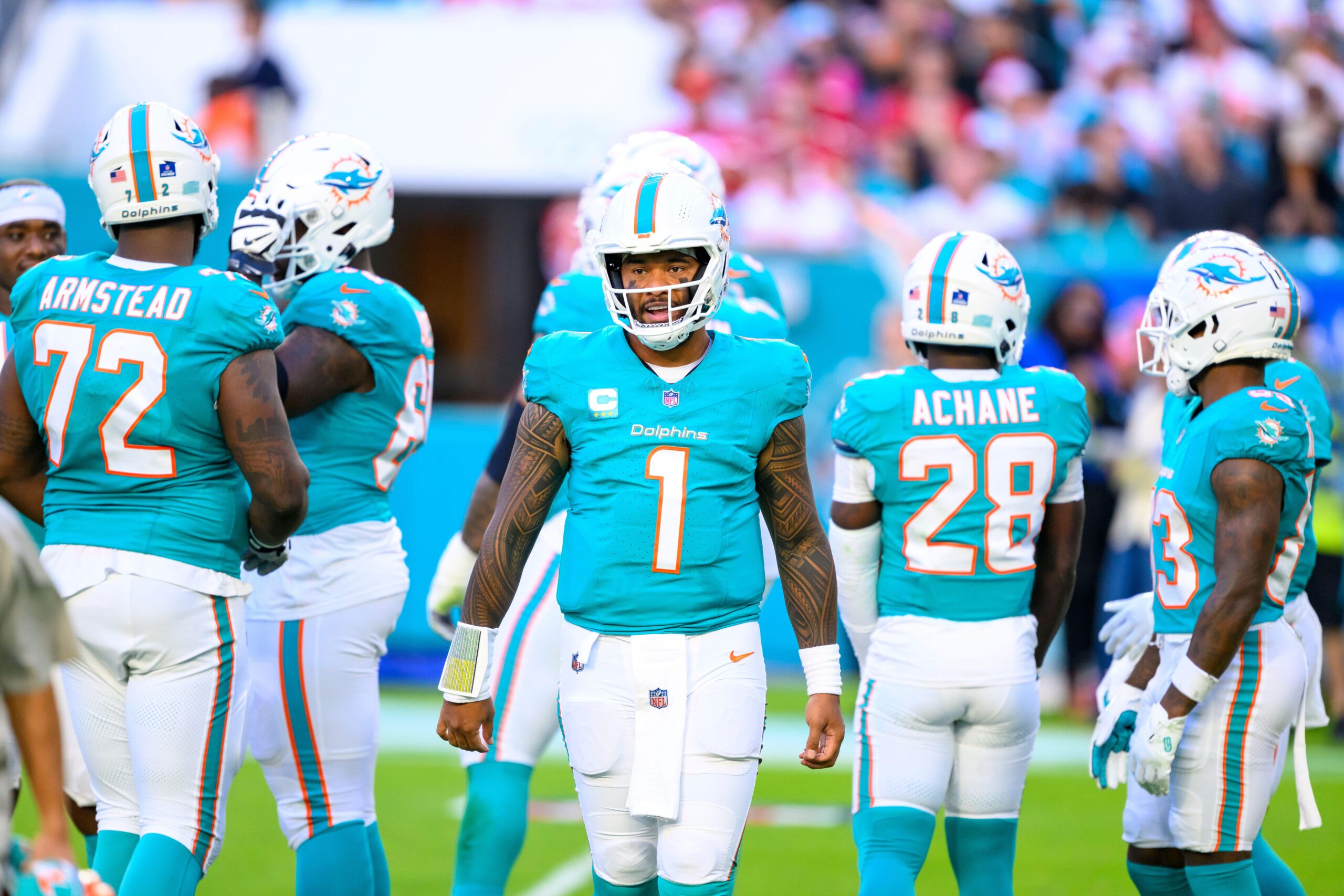
The Dolphins Today host promised more content, including UDFA grades on Tuesday morning, and urged fans to subscribe for daily coverage that does not require a paywall like ESPN Plus. The channel is closing in on 83,000 subscribers, and the momentum from this draft class could push it over the top. The host also reminded viewers to use the PrizePicks app with code HMA to get $50 in lineups after playing their first $5 lineup, emphasizing the importance of making predictions on player stats and team outcomes. The intersection of sports betting and draft analysis is becoming increasingly common, and the host’s integration of PrizePicks reflects the evolving landscape of sports media.
In the end, the Dolphins’ 2026 draft class is a study in contrasts. The B grade from both Kiper and Dolphins Today suggests a solid but not spectacular haul, but the individual evaluations reveal deep divisions on key selections. The wide receiver debate will likely rage on throughout the offseason, especially if Willis struggles to find open targets. The linebacker unit, on the other hand, could be a source of immediate dominance, and the offensive line has the potential to be a strength if Proctor reaches his ceiling. The coming months will provide the first real clues about which side of this debate is correct, and the Dolphins’ front office will be watching closely as they continue to shape the roster for the future.
